
check out these Good reads!
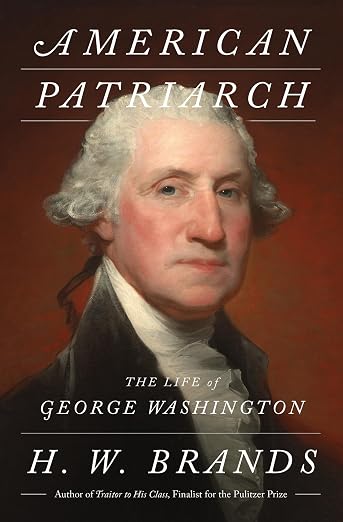
“The American Patriarch” by H. W. Brands
From historian H. W. Brands comes a new and inspiring portrait of George Washington that examines his leadership in the birth of America 250 years ago. From his early military career and role among the Virginia gentry, to his leadership during the American Revolution and return to public service as the first president of the United States, this biographybrings to life the man who was called on time and again by his peers to lead and never failed to do so.
With a well-known cast of characters—from the French and Indians on the Ohio frontier; to the Marquis de Lafayette, Benedict Arnold, and Baron von Steuben during the Revolutionary War, to Thomas Jefferson and Alexander Hamilton locked in conflict during his presidency, “American Patriarch”casts Washington as an icon of virtue who wrested America free from British control, gave credibility to the Constitution, and crafted the norms as the “precedent President” that would steady the United States as a nation for generations to follow.
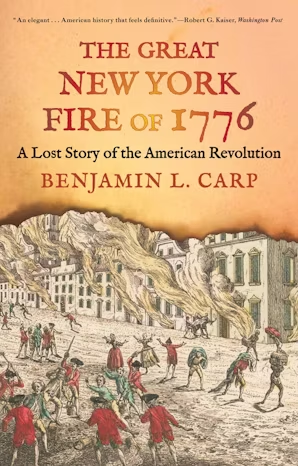
“The Great New York Fire of 1776” by Benjamin L. Carp
In “The Great New York Fire of 1776,” Benjamin L. Carp looks at one of the most mysterious and destructive events of the American Revolution, a massive fire that swept through New York City in September 1776, shortly after British forces captured the city. Carp explores whether the blaze was an accident or an intentional action carried out by American patriots determined to keep the city out of British hands. Drawing on eyewitness accounts, military records, and political writings, he places the fire within the larger context of the Revolutionary War’s fears, propaganda, and urban warfare. The book highlights how the chaos of the Revolution affected civilians and soldiers, showing that the struggle for independence was fought not only on battlefields but also in city streets and homes.
“The greatest sentence ever written” by Walter Isaacson
To celebrate America’s 250th anniversary, Walter Isaacson takes readers on a fascinating deep dive into the creation of one of history’s most powerful sentences: “We hold these truths to be self-evident, that all men are created equal, that they are endowed by their Creator with certain unalienable Rights, that among these are Life, Liberty, and the pursuit of Happiness.”
These words, drafted by Thomas Jefferson and edited by Benjamin Franklin and John Adams, lay the foundation for the American Dream and defines the common ground we share as a nation. They are the cornerstone of our nation.
Isaacson, who is also known for his amazing biography of Ben Franklin, “Benjamin Franklin: An American Life,” unpacks its genius, word by word, brining to life the then-radical concepts behind it. Readers will gain a fresh appreciation for how it was drafted to inspire unity, equality, and the enduring promise of America. With clarity and insight, he reveals not just the power of these words but also describes how, in these polarized times, we can use them to restore an appreciation for our common values.
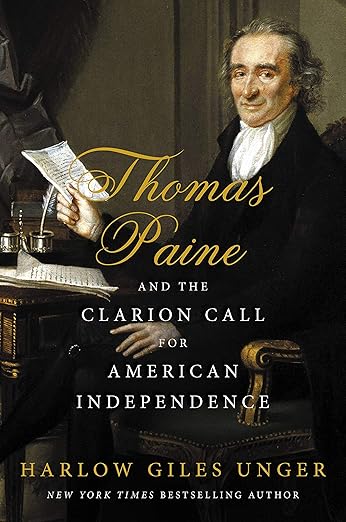
“Thomas Paine and the Clarion Call for American Independence” by Harlow Giles Unger
From New York Times bestselling author and Founding Fathers biographer, Harlow Giles Unger comes a vivid and compelling portrait of Thomas Paine, the Revolutionary writer whose words helped ignite the American Revolution and forever altered the course of history. Paine’s prose leapt off the page with unmatched clarity and force, inspiring ordinary men and women to challenge kings, governments, and long-held beliefs. In an era when the written word was the primary engine of change, Paine proved to be the most influential political writer of his generation, using reason and passion to move people from thought to action.
Far ahead of his time, Paine championed ideas that would later become cornerstones of modern democratic society, including government support for the poor, universal education and housing, social security, and care for women and children. An English immigrant to the American colonies, he forged close relationships with Benjamin Franklin, Thomas Jefferson, and James Madison, and his ideas helped shape both the Declaration of Independence and the Bill of Rights. Yet Paine’s fearless commitment to reason ultimately cost him dearly. After Common Sense and Rights of Man transformed political thought on both sides of the Atlantic, The Age of Reason challenged religious orthodoxy—and turned former allies against him, leaving the revolutionary hero isolated at the end of his life.
Packed with political drama, intellectual daring, and human tragedy, Unger’s very readable biography of Thomas Paine offers a fresh and deeply engaging look at a man who changed the world with his pen. This is an especially fitting moment to read Paine’s story, as this month marks the 250th anniversary of the publication of Common Sense—a milestone that invites readers to revisit the life and legacy of the radical thinker whose words once set America ablaze and whose ideas continue to resonate today.
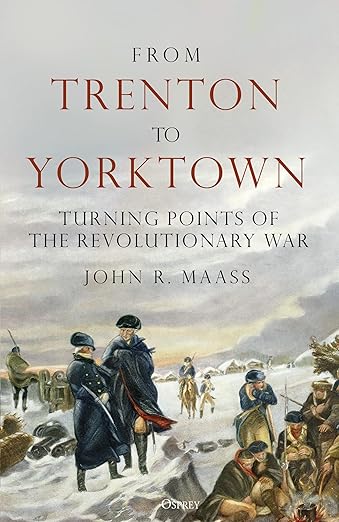
“From Trenton to Yorktown” by John R. Maass
This new book was published to pair up with the 250th anniversary of the Declaration of Independence in July 2026, and is a compelling narrative that explores five critical military campaigns that changed the outcome of the Revolutionary War. For eight years, American and British military forces fought in a bloody war. The war also involved Native American warriors, as well as the armies and navies of France, Spain, the Dutch Republic, and parts of Germany. In this entertaining and readable story of America’s fight for liberty, John R. Maass identifies the five most decisive events that helped to secure independence for the 13 colonies. These include not only the obvious military victories such as Trenton, Princeton, and Yorktown but also discusses the strong leadership that ensured Washington’s forces were capable of enduring the winter of 1778. These turning points, not all of them triumphs, delivered a victory for the new nation. “From Trenton toYorktown” offers a fresh perspective on the events of the Revolutionary War.
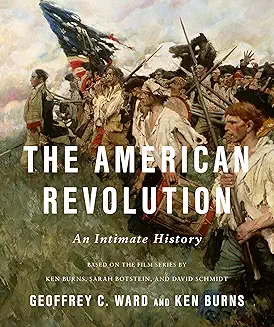
“The American Revolution: An Intimate History” by Geoffrey Ward and Ken Burns
From the award-winning historian and filmmakers of The Civil War, Baseball, Jazz, The Roosevelts, and others: a richly illustrated, human-centered history of America’s founding struggle—expanding on the landmark, six-part PBS series to be aired in November 2025
“From a small spark kindled in America, a flame has arisen not to be extinguished.” —Thomas Paine
In defeating the British Empire and giving birth to a new nation, the American Revolution turned the world upside down. Thirteen colonies on the Atlantic coast rose in rebellion, won their independence, and established a new form of government that radically reshaped the continent and inspired independence movements and democratic reforms around the globe.
The American Revolution was at once a war for independence, a civil war, and a world war, fought by neighbors on American farms and between global powers an ocean or more away. In this sumptuous volume, historian Geoffrey C. Ward ably steers us through the international forces at play, telling the story not from the top down but from the bottom up—and through the eyes of not only our “Founding Fathers” but also those of ordinary soldiers, as well as underrepresented populations such as women, African Americans, Native Americans, and American Loyalists, asking who exactly was entitled to life, liberty, and the pursuit of happiness.
Enriched by guest essays from lauded historians such as Vincent Brown, Maya Jasanoff, Jane Kamensky, and Alan Taylor, and by an astonishing array of prints, drawings, paintings, texts, and pamphlets from the time period, as well as newly commissioned art and maps—and woven together with the words of Thomas Paine— The American Revolution reveals a nation still grappling with the questions that fueled its remarkable founding.
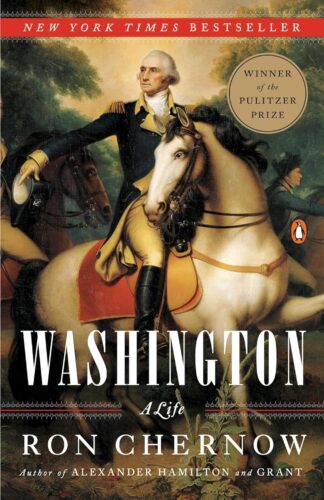
“Washington: A Life” by Ron Chernow
This is a wonderful biography of George Washington, the “Indispensable Man” of the American Revolution and our Founding. It is written by American historian and biographer Ron Chernow and was published in 2010. The book is a an incredibly readable and entertaining “one-volume, cradle-to-grave narrative” that attempts to provide a fresh portrait of Washington as “real, credible, and charismatic in the same way he was perceived by his contemporaries.” Washington comes to life in this book, and all students of the Revolution should read it at some point. Chernow was inspired to write the book while researching his biography of Alexander Hamilton. It took six years to complete and makes extensive use of new archival evidence. The book was released to wide acclaim from critics, several of whom called it the best biography of Washington ever written.
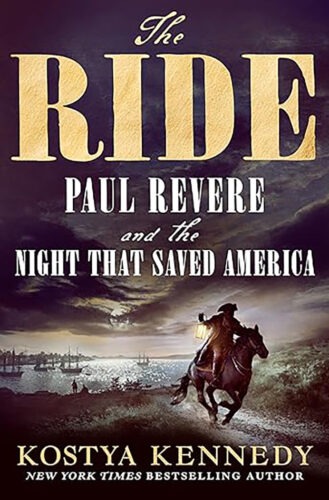
“The Ride: Paul Revere and the Night That Saved America,” by Kostya Kennedy
On April 18, 1775, a Boston-based silversmith, engraver, and anti-British political operative named Paul Revere set out on a borrowed horse to fulfill a dangerous but crucial mission: to alert American colonists of advancing British troops, which would seek to crush their nascent revolt.
Revere was not the only rider that night, and indeed, he had completed at least 18 previous rides across New England and other colonies, disseminating intelligence about British movements. But this ride was like no other, and its consequences in the months and years to come―as the American Revolution morphed from isolated skirmishes to a full-fledged war―became one of our founding legends.
In The Ride, Kostya Kennedy presents a dramatic new narrative of the events of April 18 and 19, 1775, informed by fresh primary and secondary source research into archives, family letters and diaries, contemporary accounts, and more. Kennedy reveals Revere’s ride to be more complex than it is usually portrayed―a loosely coordinated series of rides by numerous men, near-disaster, capture by British forces, and finally success. While Revere was central to the ride and its plotting, Kennedy reveals the other men (and, perhaps, a woman with information about the movement of British forces) who helped to set in motion the events that would lead to America’s independence.
Thrillingly written in a dramatic, unstoppable narrative, The Ride re-tells an essential American story for a new generation of readers.
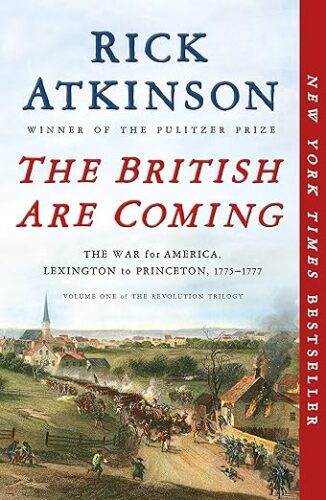
“The British are Coming” by Rick Atkinson (Volume One of the Revolution Trilogy)
Rick Atkinson, author of the Pulitzer Prize winning An Army at Dawn, the first book in his World War II trilogy, turns his attention to the American Revolution. This is part one of a new trilogy that looks at the first 21 months of the Revolutionary War, from 1775 to 1777.
From Lexington and Concord in 1775 to Princeton in 1777, American militiamen and the Continental Army take on the greatest fighting force in the world, the British army. This is a story of the fighting men and other amazing characters, Henry Knox, Nathanael Greene, Ben Franklin, George Washington, and others. The story is also told from the British perspective, making the story of the redcoats and rebels more compelling.
Full of amazing details and a compelling story from both sides, The British are Coming is a tale of heroes and villains, of sacrifice and redemption, as well as suffering. Rick Atkinson has written one of the best books on this period of the Revolution and the next two books in the series promise to be just as entertaining and interesting.
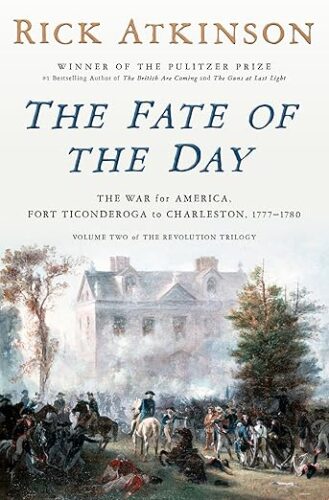
“The Fate of the Day” by Rick Atkinson (Volume Two of the Revolution Trilogy)
The second in this trilogy on the Revolution picks up the story two years into the war, where King George III is as determined as ever to bring his rebellious colonies to heel. But the king’s task is now far more complicated: fighting a determined enemy on the other side of the Atlantic has become ruinously expensive, and spies tell him that the French and Spanish are threatening to join forces with the Americans.
Historian Rick Atkinson provides a riveting narrative covering the middle years of the Revolution. Stationed in Paris, Benjamin Franklin woos the French; in Pennsylvania, George Washington pleads with Congress to deliver the money, men, and materiel he needs to continue the fight. In New York, General William Howe, the commander of the greatest army the British have ever sent overseas, plans a new campaign against the Americans—even as he is no longer certain that he can win this searing, bloody war. The months and years that follow bring epic battles at Brandywine, Saratoga, Monmouth, and Charleston, a winter of misery at Valley Forge, and yet more appeals for sacrifice by every American committed to the struggle for freedom.
Timed to coincide with the 250th anniversary of the beginning of the Revolution, Atkinson’s brilliant account of the lethal conflict between the Americans and the British offers not only deeply researched and spectacularly dramatic history, but also a new perspective on the demands that a democracy makes on its citizens.
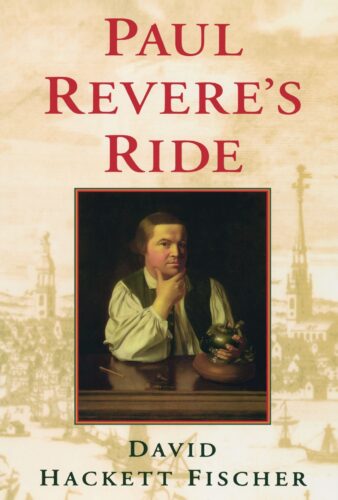
“Paul Revere’s Ride,” by David Hackett Fischer
David Hackett Fischer’s Paul Revere’s Ride is a highly engaging and readable book that brings to life the legendary midnight ride of Paul Revere. Fischer combines historical analysis with immersive storytelling, creating a compelling account of the events leading up to the American Revolution. Fischer provides readers with a renewed understanding of Revere’s role in the broader revolutionary movement. His research is thorough, and his narrative style is engaging, making this history accessible to both scholars and general readers alike. The book not only explores Revere’s ride but also goes into the significance of his actions and their impact on the overall course of American history. The 250th anniversary of the midnight ride occurred April 2025, this book has new relevance now, offering a timely reflection on how this event shaped the American Revolution and our national identity.
What sets this book as one of a favorite on the era is Fischer’s ability to clear up myths and misconceptions about the event. By carefully examining the historical sources, he shows how Revere’s ride has been mythologized over time, and he presents a more accurate and human portrayal of the man and his ride and subsequent events afterward. The book also discusses the contributions of other key figures who played pivotal roles in the early days of the American Revolution, such as John Hancock and Dr. Joseph Warren. His analysis is both scholarly and engaging, providing a deeper understanding of the events. As the 250th anniversary approaches, the book serves as a reminder of the lasting legacy of that fateful night and its continuing significance in American history.

“Making the Presidency” by Lindsay M. chervinsky
Making the Presidency is an authoritative exploration of the second US presidency, a period critical to the survival of the American republic. Through meticulous research and engaging prose, Lindsay Chervinsky illustrates the unique challenges faced by Adams and shows how he shaped the office for his successors. One of the most qualified presidents in American history, he had been a legislator, political theorist, diplomat, minister, and vice president–but he had never held an executive position. Instead, the quixotic and stubborn Adams would rely on his ideas about executive power, the Constitution, politics, and the state of the world to navigate the hurdles of the position. He defended the presidency from his own often obstructionist cabinet, protected the nation from foreign attacks, and forged trust and dedication to election integrity and the peaceful transfer of power between parties, even though it cost him his political future.
John and Abigail Adams approve! See the reel on our Instagram page.
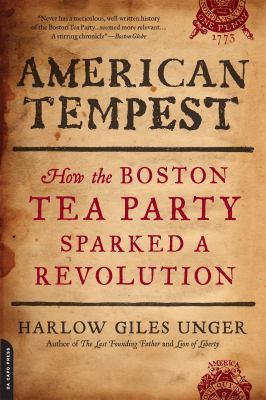
“American Tempest: How the Boston Tea Party Sparked a Revolution” by Harlowe Giles Unger
On Thursday, December 16, 1773, an estimated seven dozen men, many dressed as Indians, dumped roughly £10,000 worth of tea in Boston Harbor. Whatever their motives at the time, they unleashed a social, political, and economic firestorm that would culminate in the Declaration of Independence two-and-a-half years later.
The Boston Tea Party provoked a reign of terror in Boston and other American cities as tea parties erupted up and down the colonies. The turmoil stripped tens of thousands of their homes and property, and nearly 100,000 left forever in what was history’s largest exodus of Americans from America. Nonetheless, John Adams called the Boston Tea Party nothing short of “magnificent,” saying that “it must have important consequences.”
Combining stellar scholarship with action-packed history, Harlow Giles Unger reveals the truth behind the legendary event and examines its lasting consequence–the spawning of a new, independent nation.
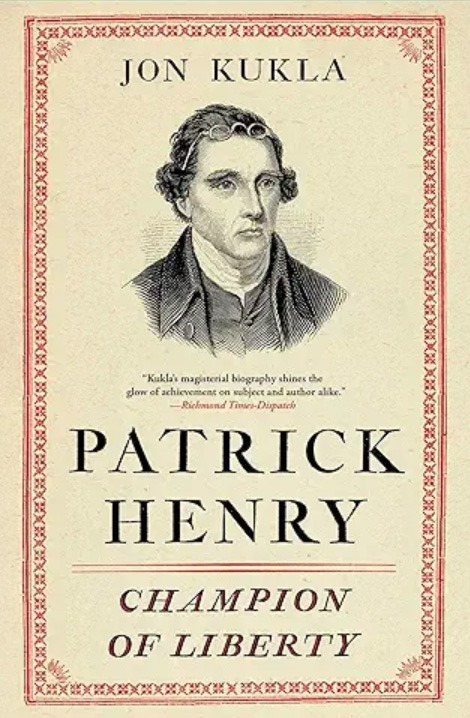
“Patrick Henry: Champion of Liberty” by Jon Kukla (2017)
This is considered to be the best biography of Patrick Henry, who, along with Samuel Adams, were two regional forces in Virginia and Massachusetts at declaring that the Colonies ought to be “free and independent” states. Jon Kukla writes a very interesting story about this Founding Father and one of the best speakers in US History.
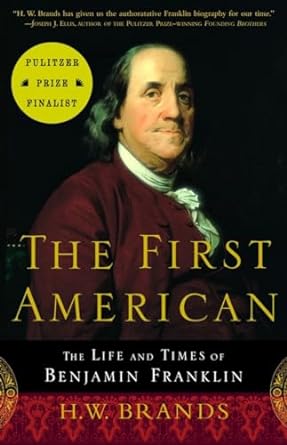
“The First American: The Life and Times of Benjamin Franklin,” by H.W. Brands
The First American is a Pulitzer Prize finalist biography that is an insightful, readable and well-rounded book that brings Dr. Franklin’s amazing life into focus. H.W. Brands portrays Franklin not just as a key figure in American history but as a complex individual who embodied the values and intelligence of the Enlightenment era. The book traces Franklin’s rise from humble beginnings in Boston to becoming a businessman, inventor, and influential diplomat (Franklin did everything). Brands also highlights Franklin’s legendary wit, curiosity, and intelligence, which allowed him to navigate personal relationships and public service with remarkable success. Through Franklin’s diplomatic efforts, particularly during the American Revolution, Brands describes his pivotal role in securing France’s support, ultimately shaping our nation’s future.
What makes this biography stand out among dozens of Franklin biographies is how Brands explores Franklin’s character with great nuance, offering insights into his evolving views on issues like liberty, science, and morality. It also paints a vivid picture of Franklin’s ability to adapt to different environments and thrive in diverse roles—from a scientist experimenting with electricity to a politician negotiating with foreign powers. Brands crafts a compelling story that not only focuses on Franklin’s public achievements but also delves into his private life, relationships, and intellectual growth. This book is a deeply engaging and engaging account, providing readers with a thorough understanding of Franklin’s profound influence on the American Revolution and the formation of the United States.
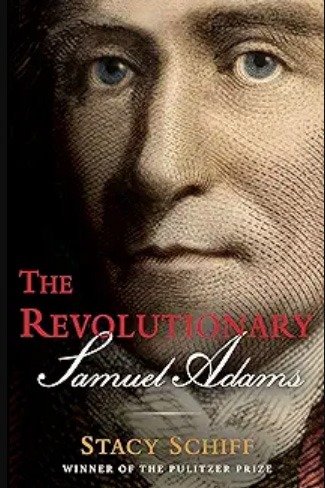
“The Revolutionary: Samuel Adams” by Stacy Schiff (2023)
This is a wonderful biography of a Founding Father who was looked at the one of the key figures in Independence in his day, but has been lost to history a bit. Stacy Schiff does an incredible job bringing him to life, as well as giving a very readable history of the era and Boston, specifically to show the events of Samuel Adams’s life and during the dawn of our nation.
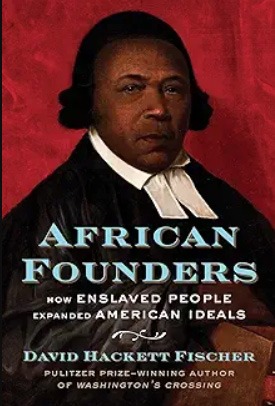
“African Founders: How Enslaved People Expanded American Ideals” by David Hackett Fischer (2022)
David Hackett Fischer is one of the preeminent scholars of the American Revolution era. Here he has compiled a history of African-American Founders and their various contributions to the founding of our nation. This book adds an amazing amount of new knowledge to help fill in gaps of the total story of the American Revolution.
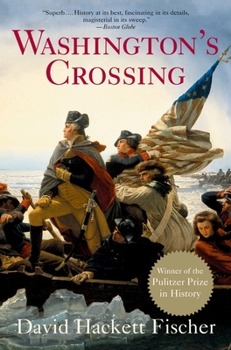
“Washington’s Crossing” by David Hackett Fischer (2004)
One of the most incredible books on the Revolutionary War Era that I have read and a masterful story of the Crossing of the Deleware River. This event, in my opinion, saved the young Continental Army and allowed them to fight another day and for 5 more years to win the war in 1781. This book teaches about all the key figures on both sides of the conflict and clarifies many of the myths surrounding the event.
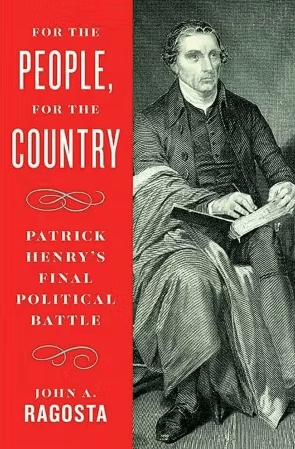
“for the people” by john a. ragosta (2023)
This book tells the story of an extraordinary letter written by George Washington to Patrick Henry in 1799, asking him to come out of retirement to defend the Constitution, which Henry did not approve of at the time of its writing. Washington was worried about threats to the new nation from Thomas Jefferson and James Madison and wanted Henry’s help to avoid the destruction of the young country. Henry steps back onto the national stage and is happy to support Washington and the Constitution. This is a fascinating story of an unknown era of one of America’s most revered Founders.
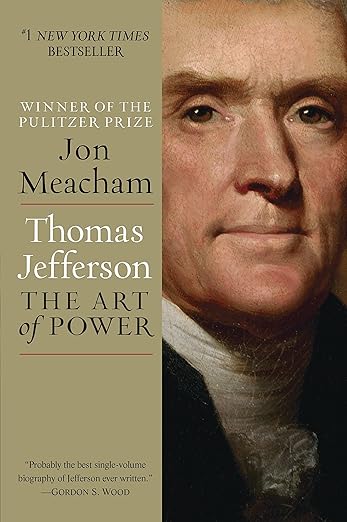
“Thomas Jefferson: The Art of Power” by Pulitzer Prize-winning author, Jon Meacham
A favorite of the many Jefferson biographies, it is a well-balanced look at one of our most important Founders. Jefferson was a complex man who crafted the most brilliant words in our history, issuing a guarantee of rights for all Americans and that those rights were given to us not by government, but by God. Jefferson comes to life as a human being, with faults like all of us. Jefferson’s many areas of expertise are discussed in the book including, his family, sciences, architecture, politics, gardening, Monticello, reading, France and French culture, and the creation of a new nation and his vision for it. Jefferson comes to life on these pages and this biography is a very worthwhile read for any student of Jefferson or the Revolutionary War era.
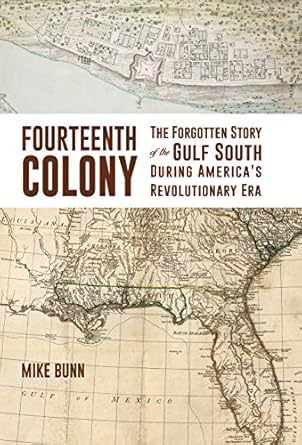
“Fourteenth Colony: The Forgotten Story of the Gulf South During America’s Revolutionary Era” by Mike Bunn
A fascinating look into an unknown part of America’s Revolutionary War era. This book is the first look at events that took place within the West Florida area, which many did not know had a Revolutionary War history. Well, it did! This region includes today’s states of Florida, Alabama, Mississippi and Louisiana. This book looks at the conflicts between Britain, France, and Spain, as well as Loyalists and Patriots for control of the Gulf South. West Florida belongs on the map of Colonial America, and Mr. Bunn places it there. This is fascinating reading that will give you new knowledge of the Revolutionary War if you are a seasoned scholar or a new student to the War. Very readable and interesting.
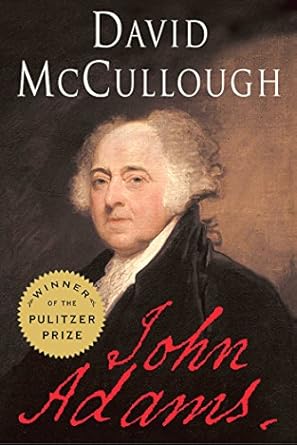
“John Adams” by Pulitzer Prize-winning author, David McCullough
This book is considered the standard biography of John Adams. It is an epic story of one of the most influential families in American history. His relationship with his wife and confidante, Abigail, is detailed here through their writings to each other throughout their life together. Adams was an opinionated and brilliant lawyer and politician who helped to create the Declaration of Independence and lead our nation through its early history. He is one of the most underrated of the Founding Fathers and McCullough gives him his rightful place in our history. Adams has not gained the notoriety of many of our Founders, but this book will educate readers on his many accomplishments in a very readable way.