
who helped shape america?
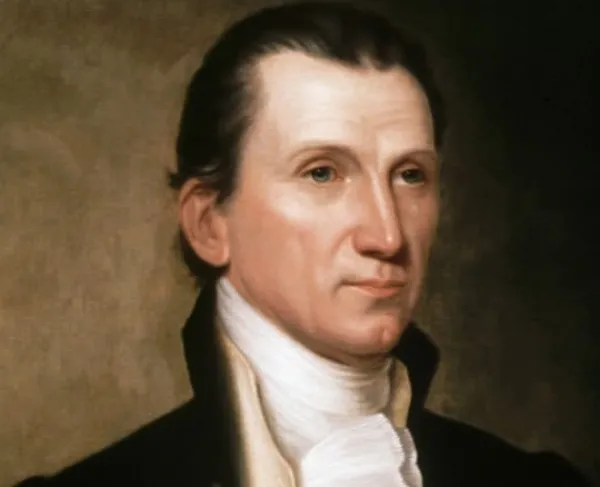
James Monroe
James Monroe was a young participant in the American Revolution, and his experiences during this conflict helped shape his future leadership at the national level. He was born in Virginia in 1758 and was still a teenager when tensions between the American colonies and Great Britain escalated into war. Inspired by the patriot cause, he left college at the College of William and Mary in Williamsburg in 1776 to join the Continental Army.
Monroe quickly became an officer and showed extraordinary bravery in battle. One of his most notable experiences came during the Battle of Trenton in December 1776. Serving under General George Washington, Monroe helped lead a dangerous nighttime crossing of the Delaware River. He is depicted in the famous painting, Washington Crossing the Delaware, by Emauel Leutze as the soldier holding the flag. During the battle, he was seriously wounded in the shoulder. Despite this injury, his courage earned him recognition and a promotion to lieutenant.
After recovering, he continued to serve in the army, though not always on the front lines. He worked as an aide to senior officers and gained experience in leadership and military organization. As the war dragged on, resources became scarce, and Monroe eventually left active military service due to a lack of opportunities for advancement.
After stepping away from combat, Monroe remained committed to the Revolution. He became involved in politics and government in Virginia, supporting the ideals of independence and self-governance. His wartime experiences gave him a strong belief in the importance of unity and national strength, ideas that would later influence his presidency.
Overall, James Monroe’s role in the American Revolution was marked by bravery, dedication, and growth. Though he began as a young soldier, the lessons he learned during the war helped prepare him for a long career in public service, including becoming the fifth president of the United States.
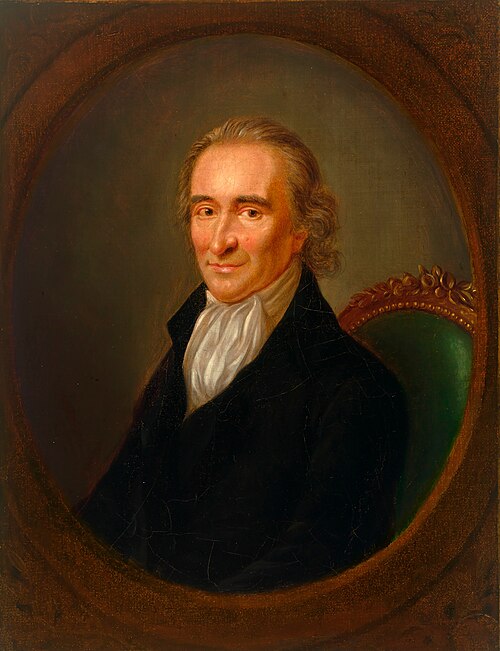
Thomas paine
Thomas Paine was one of the most influential voices of the American Revolution. He was born in England in 1737, and immigrated to the colonies in 1774. He quickly became involved in the resistance to British rule. In January 1776, 250 years ago, he published “Common Sense,” a pamphlet that argued for complete independence from Great Britain. At a time when many colonists were still uncertain about breaking away, Paine’s clear, direct language inspired ordinary people to see independence not just as possible, but as necessary. His writing helped shift public opinion and helped pave the way for the Declaration of Independence later that year.
Paine’s importance in 1776 cannot be overstated. “Common Sense” sold hundreds of thousands of copies, an unbelievable number for the time, and it was read aloud in taverns, meeting halls, and army camps. He challenged the idea of monarchy and argued that government should exist to protect the natural rights of the people—ideas that deeply influenced revolutionary leaders.
Throughout the war, he continued to inspire American troops and citizens with his writing, famously penning the line, “These are the times that try men’s souls.” His words strengthened morale during some of the darkest moments of the Revolution.
As our Patriot of the Month, Thomas Paine stands out not for military command or political office, but for the power of his words and ideas. He believed in liberty, equality, and democratic government, and he was willing to challenge long-standing traditions to defend those principles. Two and a half centuries after 1776, Paine’s legacy reminds us that persuasive ideas—and the courage to share them—can change the course of history.
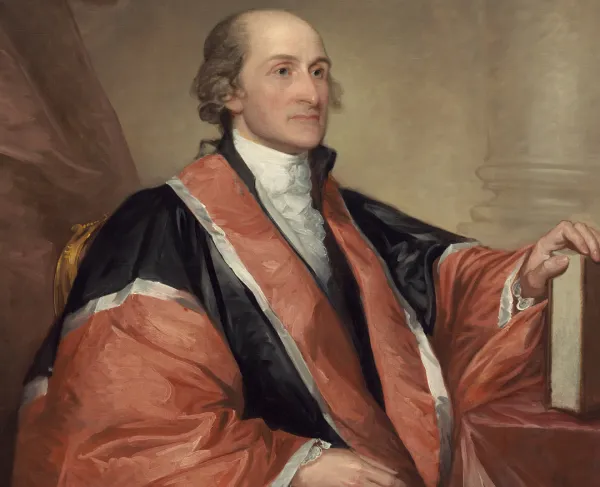
John Jay
John Jay was an important patriot and one of our key Founding Fathers. He played a major role during the Revolution and helped shape our new nation after independence was achieved. Although he is usually less well known than figures like George Washington or Thomas Jefferson, Jay’s contributions were essential to the success and stability of the early United States.
During the Revolution, Jay strongly supported independence from Great Britain. He served as a delegate to the First and Second Continental Congresses, where he helped guide the colonies toward eventual independence. Jay believed that freedom and self-government were necessary for the colonies’ future, and his dedication to the patriot cause showed his deep commitment to protecting American rights and achieving independence.
He also made important contributions as one of the new nation’s diplomats. He helped negotiate the Treaty of Paris in 1783, which officially ended the Revolutionary War and recognized the US as an independent nation. This achievement helped to secure peace and allowed the new nation to move forward without foreign interference. Jay’s skills in diplomacy demonstrated his intelligence, patience, and devotion to the nation’s success.
After the Revolution, Jay continued to serve his country by helping to shape the new government. He co-wrote The Federalist Papers, a series of essays that supported the ratification of the U.S. Constitution. These essays helped convince Americans that a strong federal government was necessary. Jay later became the first Chief Justice of the United States, where he helped establish the authority and basic structure of the Supreme Court.
In conclusion, John Jay’s life reflects the values of patriotism, service, and leadership. Through his work as a revolutionary leader, diplomat, and Supreme Court Chief Justice, he helped secure independence and build a stable nation. John Jay may not always receive the same attention as other Founding Fathers, but his impact on American history remains significant and lasting.
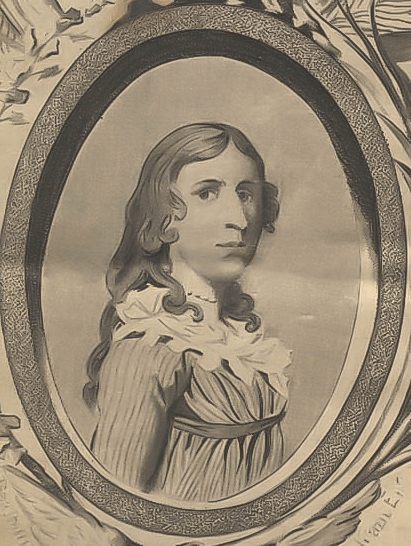
Deborah Sampson
Deborah Sampson was an important figure in American history best known for her bravery and service during the American Revolution. She was born on December 17, 1760, in Plympton, Massachusetts. She grew up in a poor family and had to work hard from a young age. She received minimal formal education. Despite these challenges, she learned to read and write and developed a strong sense of independence that would serve her well throughout her life.
During the Revolutionary War, women were not allowed to serve as soldiers. Deborah Sampson still wanted to support the fight for American independence, so in 1782 she disguised herself as a man and enlisted in the Continental Army under the name Robert Shurtliff. She fought in the Hudson River Valley and served as a soldier in combat for over a year, showing courage and determination. At one point, she was wounded in battle and treated herself to avoid being discovered as a woman.
Eventually, she became ill and her true identity was discovered. She was not punished but was honorably discharged from the army in 1783. After the war, she married Benjamin Gannett and had four children. Later in life, she gave speeches about her experiences in the War, becoming one of the first American women to go on a lecture tour.
Deborah Sampson’s story is remembered as an example of courage, perseverance, and a desire for equality. She challenged the limitations placed on women in her time and proved that women were capable of serving their country in many ways. Today, she is celebrated as a pioneering woman in American history and a symbol of bravery and determination.
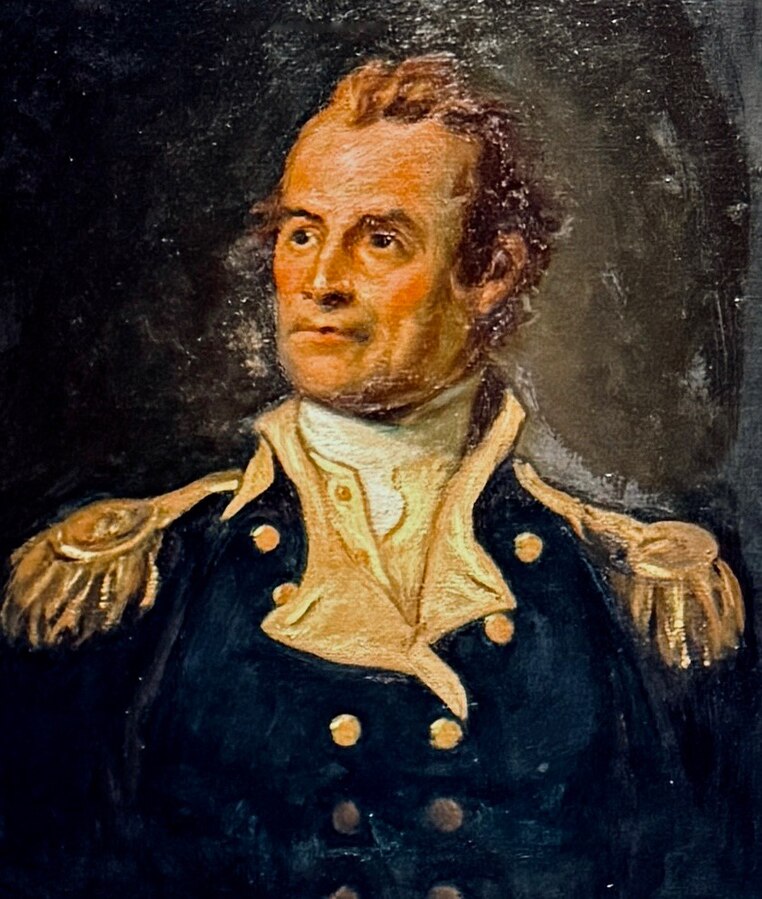
John Glover
General John Glover of Marblehead, Massachusetts, was a business owner, sailor, and militia officer whose leadership skills helped to win the American Revolution. He was born into a fishing family and he built a successful seaside business. He then became active in local politics in the Marblehead and Salem area. By the 1770s, he was given command of the Marblehead Regiment, a unit composed largely of sailors, fishermen, and merchants who were used to the seas and cooperation with each other. When the war broke out, Glover and his men offered not only discipline but unique experiences unmatched anywhere else in the colonies. His temperament, leadership skill, and unwavering commitment to the patriot cause made him one of George Washington’s most trusted officers.
The Marblehead Regiment earned legendary status for its seamanship, versatility, and courage. Its biggest contribution came during the retreat from Long Island in August 1776, when Glover’s men carried Washington’s entire army safely across the East River under cover of a large blanket of fog, preventing what would almost certainly have been a catastrophic defeat. Later that year, they again played a decisive role in the Christmas night crossing of the Delaware River, sailing across ice-choked waters to deliver Washington’s Army to Trenton. Aside from these iconic moments, the Marblehead men served as sailors, infantry, and logistical specialists throughout the war. Their maritime skills enabled crucial transport missions, privateering that disrupted British supply lines, and coastal defenses vital to the young nation’s survival.
As we prepare to celebrate America’s 250th birthday next July, General Glover’s life and the achievements of his Marblehead Regiment offer a strong reminder of how ordinary citizens—fishermen, tradesmen, immigrants, and sailors—shaped the course of the Revolution. Their unity, discipline, and skills embodied the spirit of a new nation struggling for independence. General Glover’s legacy lives on not only in the enduring stories of the Long Island evacuation and the Delaware crossing, but also in the example he set as a leader who matched skill with humility and sacrifice with resolve.
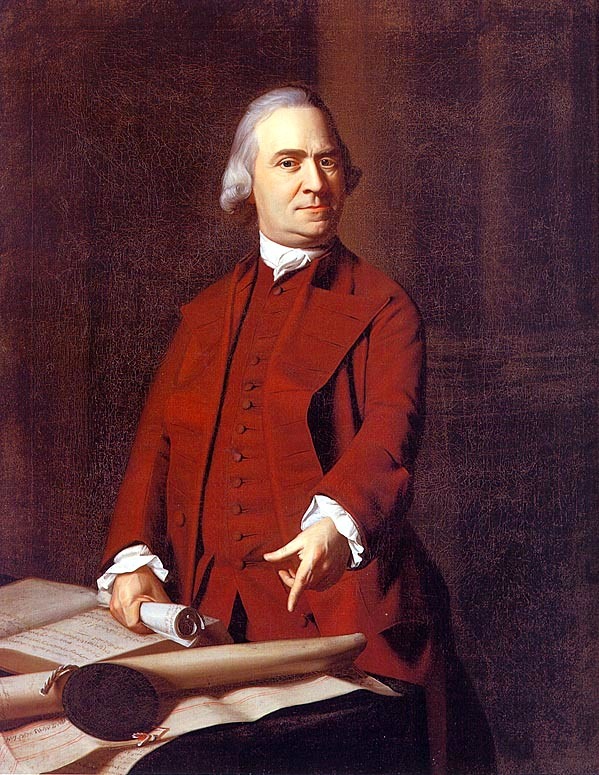
Samuel Adams
Few figures from the American Revolution era exemplify the spirit of independence quite like Samuel Adams. He was born in Boston in 1722 to very humble beginnings. He was not the kind of leader who led armies into battle—his weapons were his words and unshakable conviction to the cause of freedom. A graduate of Harvard College, Adams was deeply influenced by the Enlightenment ideas about natural rights and government by consent. While some of his peers hesitated to defy the British Crown, Adams never wavered. His sharp pen and political savvy helped turn growing discontent into a full-fledged movement for independence. He was an early voice for independence, long before others jumped into the movement.
Adams was the ultimate political agitator in the best sense of the word. When Parliament imposed taxes on the colonies without representation, Adams rallied Boston to resist, helped to form the Sons of Liberty, a secret organization devoted to defending colonial rights. His writings in newspapers and pamphlets stirred the passions of everyday citizens, convincing them that liberty was worth the risk of rebellion. He was also an incredible organizer behind the scenes and coordinated protests like the Boston Tea Party in 1773, where patriots dumped British tea into the harbor in defiance of royal authority. To many in London, Adams was the very face of sedition and public enemy number one to the Crown; to his countrymen, he was the voice of freedom.
When the colonies gathered for the 1st and 2nd Continental Congresses, Adams’ efforts paid off. His early voice for independence helped set the stage for the drafting of the Declaration of Independence in 1776—a document that would change the course of human history. While Thomas Jefferson penned the words, men like Adams had already prepared the hearts and minds of Americans to believe in them and support them. He recognized that independence was not just a political act, but a moral duty to future generations who would inherit a free nation.
As America approaches the 250th birthday of the Declaration of Independence next year, Samuel Adams’ legacy feels more relevant than ever. His belief that freedom requires vigilance, participation, and courage still speaks to us today. Adams once wrote, “The liberties of our country… are worth defending at all hazards.” Those words remind us that liberty is not something handed down—it is something we continually earn through engagement and principle. In celebrating our 250th birthday, we honor not only the Declaration itself but the restless spirit of patriots like Samuel Adams who made it possible. He may not have sought fame or fortune, but his vision helped shape the ideals that define America. Two and a half centuries later, his call to defend freedom—through unity, conviction, and courage—remains as powerful as it was in the streets of Boston.
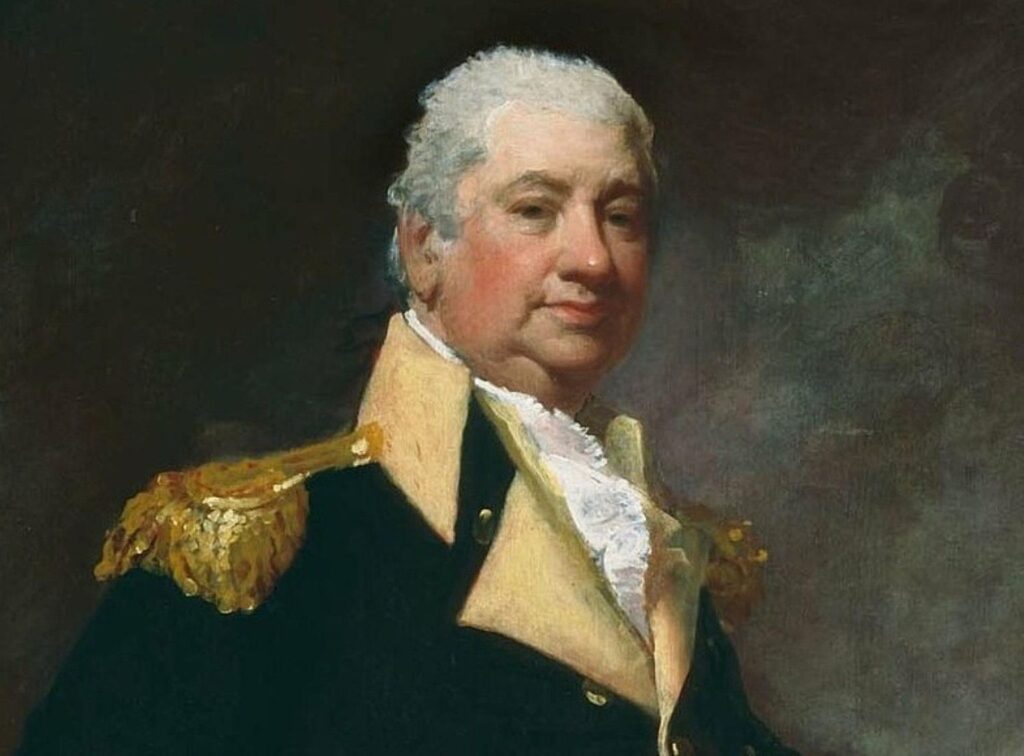
Henry Knox
Henry Knox’s life reads like a revolutionary war movie—full of ambition, self-teaching, and unparalleled patriotism. He was born in Boston in 1750 and faced hardship when his father left the family, forcing him to leave school at age nine to support his mother and siblings. He found work in a bookstore, and devoured books on science, military history, and engineering. By the time the first shots of the Revolution rang out, Knox had not only become a successful bookseller but also a self-taught expert in artillery tactics. That rare combination of intellect, drive, and loyalty would catapult him into the inner circle of George Washington—and into the pages of American history.
Knox’s first major contribution to the American cause was a feat that seemed impossible. In the winter of 1775–1776, general Washington requested Knox to retrieve 60 tons of captured British cannons from Fort Ticonderoga and transport them over 300 miles to Boston. Knox, just 25 years old, led the effort through frozen rivers, snowy mountains, and iced lakes, using ox-drawn sleds and exemplary determination. The “Noble Train of Artillery,” as it came to be known, finally arrived in Boston in January 1776. Its placement on Dorchester Heights forced the British to evacuate the city without a battle—an early and vital morale boost for the Continental Army. That moment cemented Knox’s reputation not just as a logistical genius, but as a man Washington could trust.
Over the next several years, Knox became a central figure in the American military command. As Chief of Artillery, he modernized the Continental Army’s artillery forces, created training programs, and oversaw the development of supply systems that were desperately needed. He was present at every major battle from Trenton to Yorktown, and his leadership in artillery was a key in the siege of Yorktown—the final major battle of the War. Beyond his battlefield role, Knox was known for his calm under pressure, his loyalty to Washington, and his ability to inspire troops, even in the darkest days.
After the war, Knox became the United States’ first Secretary of War under President Washington, a role he held from 1789 to 1794. He helped lay the foundations of the U.S. Army and Navy, advocated for the establishment of military academies, and managed delicate relationships with Native American tribes during westward expansion. Despite growing political tensions and the rise of party factions he disliked, Knox remained committed to the vision of a stable, unified Republic. He retired to a large estate in Maine, where he attempted (unsuccessfully) to build a business empire and lived until his death in 1806, at the age of 56.
Though often overshadowed by more famous contemporaries, Henry Knox was a cornerstone of the American Revolution and the early Republic. His legacy lies not just in the cannons he hauled or the armies he led, but in the idea that merit and effort, not birth, could chart a man’s path in a new nation. In a time of revolution, Knox embodied its possibilities.
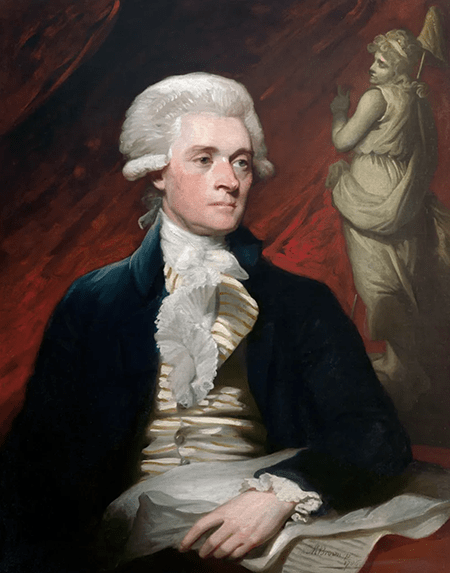
Thomas Jefferson
Thomas Jefferson, born on April 13, 1743, in Virginia, was a central figure in the founding of the United States and the main author of the Declaration of Independence. Jefferson excelled at all he did. A brilliant writer, philosopher, and statesman, Jefferson advocated for Enlightenment ideals such as liberty, public education, and the separation of church and state. He served as the third president of the United States from 1801 to 1809, and during his presidency, he completed the Louisiana Purchase, doubling the size of the country. He also designed and founded the University of Virginia, which he considered one of his greatest achievements.
Jefferson served as the United States Minister to France from 1785 to 1789. During his time in Paris, Jefferson worked to strengthen diplomatic and economic ties between the United States and France. He observed the political and social changes taking place in France, including the early stages of the French Revolution, and his experiences there deepened his understanding of the Enlightenment ideas. Jefferson also used his time in Paris to study European culture, science, and architecture, which later influenced his vision for America. His role in Paris helped shape both his political philosophy and his contributions to the development of the United States.
How should we remember Jefferson? His legacy is complex and often contradictory. He was the main author of the Declaration of Independence, writing eloquently about liberty, equality, and democratic ideals, yet he was also a lifelong slaveholder who failed to reconcile these beliefs with the realities of slavery. His presidency included major accomplishments like the Louisiana Purchase, but he also expanded executive power in ways that seemed to contradict his earlier advocacy for small and limited government. Historian Joseph Ellis called Jefferson the “American Sphinx” because of these deep contradictions and his complicated personality. Like the riddle of the Sphinx, Jefferson’s character is difficult to fully understand—he often presented different sides of himself to different people and left behind writings that can be interpreted in multiple ways.
Jefferson also shared a complicated but meaningful relationship with fellow Founding Father John Adams. Though they were close allies during the Revolution, their friendship turned into political rivalry during the early years of the United States. However, after both had left public office, the two men reconciled and began a rich and respectful correspondence that lasted until their deaths. In a remarkable historical coincidence, both Jefferson and Adams died on July 4, 1826—the 50th anniversary of the Declaration of Independence. As the United States approaches its 250th birthday in 2026, their intertwined lives serve as a powerful symbol of the country’s founding struggles, ideals, and enduring quest for unity despite difference.
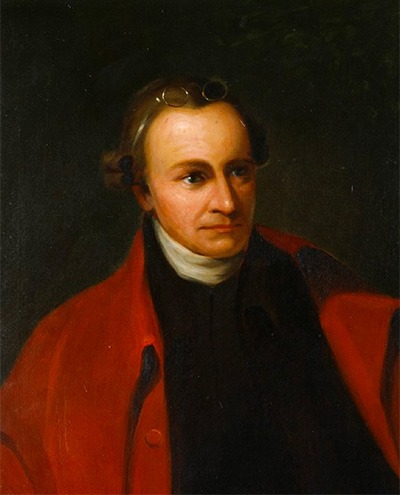
Patrick Henry
Patrick Henry was one of the most powerful voices of the American Revolution and he remains a key figure in the story of our nation’s founding. Born in Hanover County, Virginia, in 1736, he rose from modest beginnings to become one of the most influential speakers of his time. His undying dedication to liberty and individual rights made him a central figure in the resistance to British tyranny. He is best remembered for his electrifying speech in 1775 at the Virginia Convention, where he famously declared, “Give me liberty, or give me death!”—a phrase that has echoed through generations as a rallying cry for freedom.
Henry’s voice was not merely theatrical—it moved people to action. As a member of the Virginia House of Burgesses, he was among the first to call for organized resistance to British policies, most notably with his bold opposition to the Stamp Act in 1765. His speeches stirred emotions in colonists to rise up and challenge British authority. He inspired a spirit of revolution across the colonies at a time when it was a pretty bold thought. Throughout the Revolutionary era, he earned the title “Orator of the Revolution” for his powerful ability to stir both emotion and conviction in the hearts of Americans fighting for independence.
Beyond his speeches, Patrick Henry was a devoted public servant and statesman. He served five terms as Virginia’s governor and played a central role in shaping early American government. While he initially opposed the ratification of the U.S. Constitution—believing it granted too much power to the federal government and lacked sufficient protections for individual rights—his resistance was rooted in his unshakable commitment to the rights of the people. Henry’s concerns helped lead to the adoption of the Bill of Rights, securing key freedoms Americans still hold dear today.
Importantly, though he was a leading Anti-Federalist, Henry eventually came to support the Constitution once it was ratified and began functioning as the law of the land. Recognizing that the unity and stability of the nation were of utmost importance, he put aside his earlier objections and encouraged cooperation with the new federal government. His willingness to support and compromise for what was best for the country, even after opposing it, speaks to his character as a true patriot—one who placed the well-being of the Republic above personal or political pride.
As we approach the 250th anniversary of American independence in July 2026, Patrick Henry’s legacy feels as important as ever. His dedication to liberty, his courage to speak against injustice, and his ability to adapt for the sake of national unity remain enduring lessons for our and every generation. He was not just a man of passionate words, but a visionary leader who helped give voice to a revolution—and whose influence continues to shape the soul of the nation.
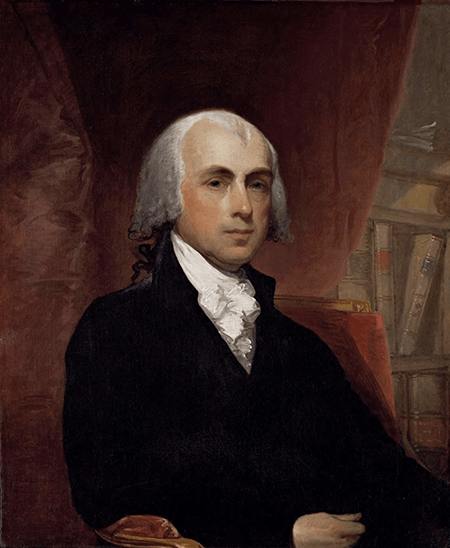
James Madison
James Madison, born on March 16, 1751, in Orange County, Virginia, is often called the “Father of the Constitution” for his crucial role in shaping the U.S. Constitution and the Bill of Rights. A brilliant political thinker, Madison was one of the key authors of The Federalist Papers, a series of essays written with Alexander Hamilton and John Jay to support the ratification of the new Constitution. Recognizing the need to protect individual liberties, Madison later drafted the first ten amendments to the Constitution—known as the Bill of Rights—cementing his legacy as a champion of personal freedoms and limited government.
Madison’s notes from the Constitutional Convention of 1787 are considered one of the more important historical records of the founding of the United States. Because the convention was held in secrecy, Madison’s notes provide the best insight into the debates, compromises, and ideas that shaped our Constitution. He wrote down the speeches, arguments, and opinions of the delegates, preserving the rationale behind key decisions like the structure of Congress and the separation of powers. Without Madison’s notes, historians would know far less about how the Constitution was created.
Madison came from a wealthy Virginia plantation family and was deeply influenced by his upbringing and education. Though physically small (5 ft 4 inches tall), frail, and quiet in public, he was a force behind the scenes in political debate and policymaking. He married Dolley in 1794, and she became one of the most influential and important First Ladies, known for her social grace and political savvy during Madison’s presidency and for helping to save the Gilbert Stuart painting of George Washington in the East Room of the White House as it was being attacked by British soldiers during the War of 1812.
With the United States approaching its 250th birthday in 2026, Madison’s vision of a balanced government that protects individual rights remains at the heart of American democracy, reminding us of the enduring power of ideas in shaping a nation.
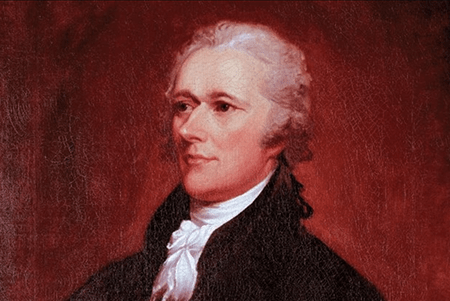
Alexander Hamilton
Alexander Hamilton was born on January 11, 1755 (or 1757, nobody knows for sure) on the island of Nevis in the Caribbean, rose from humble beginnings to become one of the most influential and recently best-known Founding Fathers of the United States. His father abandoned the family when Alexander was young, and his mother died soon after, leaving him orphaned at the age of 11. Despite these hardships, Hamilton’s brilliance caught the attention of local citizens who helped send him to New York for his education. He became a student at King’s College (now Columbia University) and soon threw himself into the Revolutionary cause. During the Revolution, Hamilton became a close aide and trusted advisor to General George Washington—a relationship that would shape his career and elevate him to national prominence.
Hamilton’s legacy includes being the first Secretary of the Treasury, where he created the financial foundations of our nation, including the National Bank and banking system. He also played a vital role in writing the Federalist Papers, calling for ratification of the new Constitution. He married Elizabeth (Eliza) Schuyler, a member of a powerful New York family, and together they had eight children. Hamilton’s life and legacy were cut short when he was killed on July 11, 1804 during a duel with Vice President Aaron Burr. Eliza Hamilton spent decades after his death working to preserve his memory and legacy, including founding the first private orphanage in New York City.
In recent years, his story has been rediscovered through Ron Chernow’s 2004 biography Alexander Hamilton, which inspired Lin-Manuel Miranda’s award-winning musical Hamilton. As the United States approaches its 250th birthday in 2026, Hamilton’s dramatic life—from abandoned child to architect of American government—remains a compelling and uniquely American story.
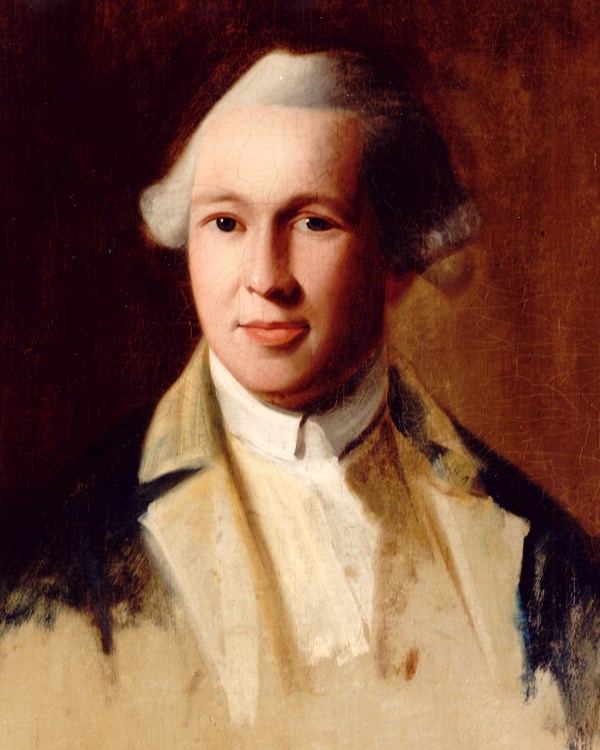
Dr. Joseph Warren: a martyr of the revolution
Dr. Warren was one of the most influential people during the early part of the American Revolution. He was a member of the Sons of Liberty and was one of Boston’s greatest physicians during the 1770s. He became active in the Sons of Liberty and was a great orator, speaking on the anniversary of the Boston Massacre. He was responsible for sending out Paul Revere and William Dawes on their midnight rides to warn John Hancock and Samuel Adams, who were staying in Lexington, that the regulars would be marching out to arrest them on April 18, 1775.
Dr. Warren was commissioned as a Major General in June of 1775 and was present at the Battle of Bunker Hill on June 17, 1775. He was one of the many heroes of Bunker Hill and he was killed before he could realize his dream of an independent nation. His hope for us was that “…. our land be a land of liberty, the seat of virtue, the asylum of the oppressed, a name and a praise in the whole Earth, until the last shock of time shall bury the empires of the whole world in one common undistinguished ruin!”
Some have said that if he had lived longer, he could have been our greatest Founding Father, surpassing even Washington. He is a martyr of the Revolution and an inspiration to us all.
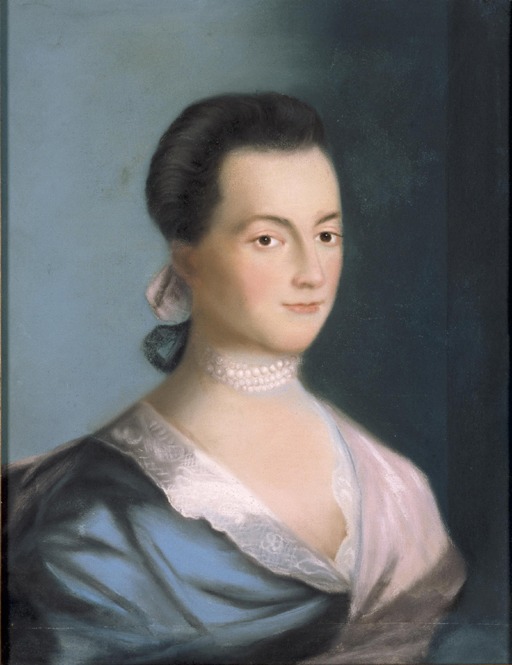
Abigail Adams
Aside from fulfilling the traditional 18th Century American role of wife and mother, Abigail Smith Adams lived a remarkable life in which she held non-traditional roles, and had a broad scope of experiences that few women had. She is considered to be one of America’s first feminist voices, and became an investor, entrepreneur, and European traveler. She met the King and Queen of England, was the wife of America’s second president, mother to the 6th, and was also the first woman to live in the White House.
Born in Weymouth, Massachusetts in 1744, Abigail lacked a formal education, but she was an avid reader, and lover of Shakespeare. She is known for the vast volumes of letters that she wrote throughout the course of her life, which not only tell her personal story, but the story of America’s journey from colony to republic.
In 1764 she married John Adams, and together they dedicated their lives to the founding of America. During the American Revolution, her husband’s lengthy political career separated them for the better part of ten years, which was the greatest hardship of Abigail’s life. She was tasked with raising a family, running a farm, and successfully managing the family finances in the face of war, inflation, and continuing uncertainty. Battles with the redcoat forces came uncomfortably close to home, and she had to be ready to “fly to the woods” with her children at a moment’s notice. Massachusetts paper currency lost two thirds of its value, and highly sought after “hard money” was scarce. She decided to invest the less desirable paper money in government securities and state notes, which paid a strong return. When her husband was sent overseas, she requested that he send her trunks of rare European goods, which she sold for cash in Boston. Much to her family’s benefit, she continued the practice of using what money she had to make more for many years to come.
Despite the heavy burden of responsibility which fell upon her shoulders, she also possessed a clear vision of what needed to change in a new American society. In one sense, she displayed progressive views on women that transcended the times in which she lived. While John served in the Continental Congress, she wrote to him and urged him to “remember the ladies” when forming a “new code of laws” for America. She said, “Do not put such unlimited power into the hands of husbands. Remember, all men would be tyrants if they could.”
The conversations between Abigail and her husband stand as a testament to the love and mutual respect that they would share throughout the duration of their lives and beyond. Before Abigail died in 1818 she did something that few, if any, married women did. She created a will. She left nearly every asset that she considered to be hers to female relatives and servants, despite the fact that the laws of coverture didn’t allow married women to possess money or property. This will was honored by her husband and sons. At the time of her death, she not only bequeathed wealth to the women in her life, she also passed along her independent spirit and sense of ownership, in hopes that future generations of women could also steer the course of their lives with greater agency and authority.
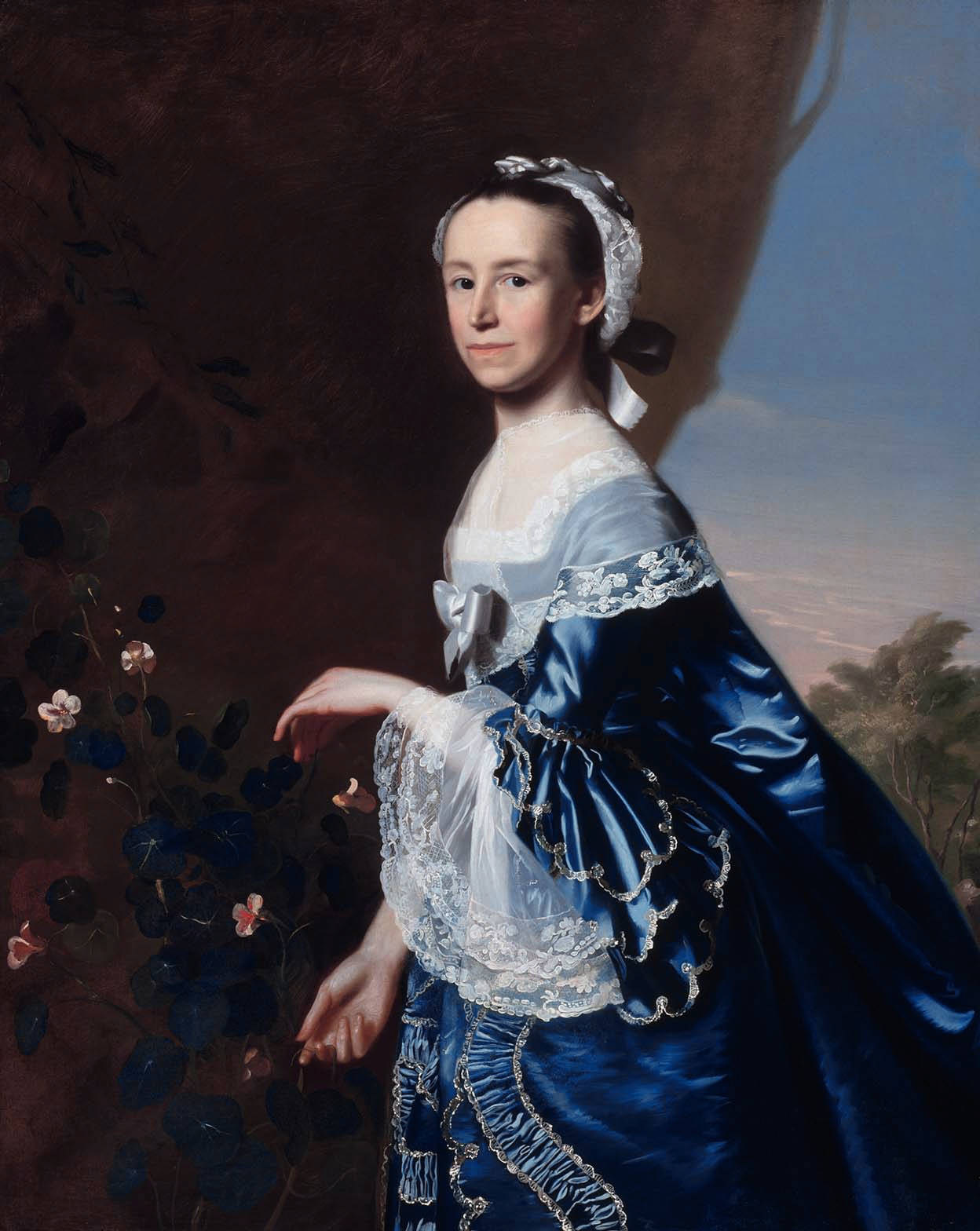
Mercy Otis Warren
Mercy Otis Warren (1728-1814) was a prominent American writer and political activist during the American Revolutionary period. Born in Massachusetts, she was a passionate advocate for the patriot cause and used her literary talents to promote revolutionary ideas. Warren is best known for her political plays and satirical writings that criticized British rule and championed American independence. Her works, such as “The Adulateur” and “The Group,” were influential in shaping public opinion and rallying support for the revolutionary movement. Additionally, Warren was a close friend and correspondent of many great patriots, including John and Abigail Adams.
She is also noted for her three-volume work titled “History of the Rise, Progress, and Termination of the American Revolution.” This seminal work, published between 1805 and 1815, provides a comprehensive account of the events leading up to, during, and after the American Revolution. Warren offered unique insights into the political and social dynamics of the period, drawing from her own experiences and observations as well as her extensive correspondence with key figures of the time. Her work remains an important source for understanding the American Revolutionary era and the ideals that shaped the young nation.
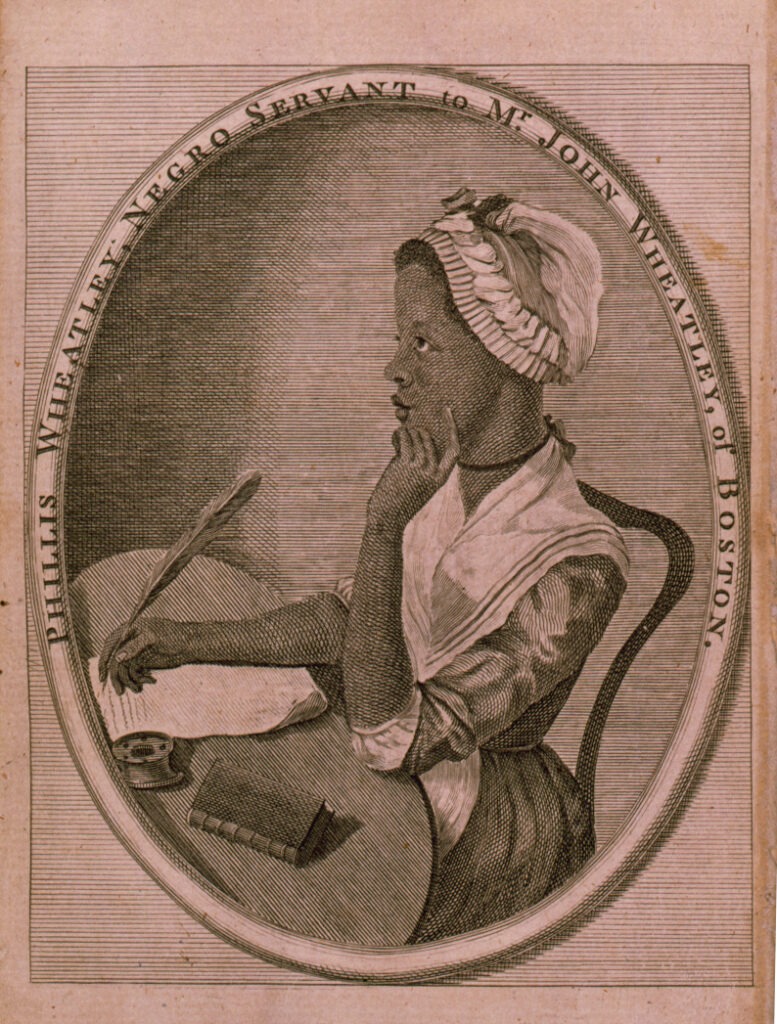
Phillis Wheatley
Phillis Wheatley was an African American poet of the 18th century. Born in West Africa around 1753 in what would now be called the country of Gambia, her ship was supposed to dock in the West Indies where she and the rest of the slave transport were to be auctioned off. Instead she was brought to the city of Boston, Massachusetts in 1761. She was about eight years old. Upon her arrival, she was purchased by a wealthy tailor and merchant named John Wheatley as a personal slave and attendant to his wife, Susannah. She was named Phillis for the ship that brought her to Massachusetts. The Wheatley family discovered that Phillis was exceptionally intelligent and decided to educate her. Her primary instructors were the Wheatley’s twin children Nathaniel and Mary, as well as Mrs. Wheatley herself. She mastered the English language within two years, in addition to learning Greek and Latin. She also studied geography, astronomy and literature, discovering an encouraged passion for poetry. She wrote her first poem at fourteen years of age, using the ever growing conflicts in Boston that would lead to the American Revolution as inspiration.
After the death of prominent evangelist Reverend George Whitfield, of whom she admired, she caught the attention of Selina Hastings, the Countess of Huntington. Countess Hastings aided Phillis in publishing a work she produced about Rev. Whitfield in England, bringing Phillis out of anonymity. Not long after, a meeting of some of the most prominent figures in the city of Boston was held at the behest of Mr. Wheatley, determining that she was the author of her various anonymous works and could be given the credit as such. In 1773, she became the first African American to have a work of literature published, as well as the only woman of color at that time. Her volume is called Poems on Various Subjects Religious and Moral. She traveled to England for the publication of the book, briefly engaging in popularity as she was sought out for her peculiarity by members of England’s gentry, as well as Benjamin Franklin. Despite this massive accomplishment, and unfortunately falling on difficult times after the revolution, she passed away on December 5th, 1784. She was around thirty years of age. Though not as appreciated during her time, her influence is still felt in our country today. Professors in universities have taught curriculums entirely based around her works, and various buildings in the country have been named after her, including a popular library in New York. A statue of her likeness can be found in the city of Boston as well. She is survived by her works, as well as a legacy of endurance, perseverance, and hope in the face of immense hardship and adversity.
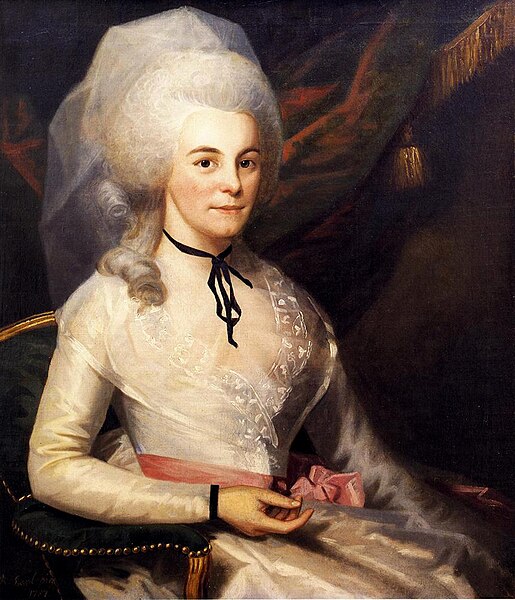
Eliza Hamilton
Elizabeth Schuyler Hamilton was born August 9, 1757. The second daughter of General Philip Schuyler and Catherine Van Rensselaer Schuyler, Eliza was connected to some of the most important and influential Dutch families in their region of New York. Her marriage to Alexander Hamilton in 1780 likely came as a surprise to many family and friends because of their vastly different social standings. Though he was aide-de-camp to General George Washington, Alexander was an orphaned immigrant with few social connections, and he could offer the young Miss Schuyler little assurance of prosperity in their new life together.
Although Alexander’s intelligence and acuity propelled him to prominence, he only accomplished this with the support of Eliza, whom he affectionately called Betsey. Alexander helped shape the American government and economy for future generations, and some of his important drafts through the years are written in Eliza’s handwriting; presumably Alexander dictated as he rested his writing hand. Over their 24 years of marriage, Eliza gave birth to 8 children, and also took in her orphaned goddaughter Fanny Antill, who was raised as the Hamiltons’ own daughter for 10 years. The most well-known portrait of Mrs. Hamilton was painted by Ralph Earl in 1787 while he was in debtors’ prison – another charitable endeavor as the Hamiltons commissioned it to help him earn the income needed to secure his release, and encouraged many of their friends to do the same.
After the tragic deaths of her eldest son in 1802 and her husband in 1804, Eliza raised their remaining children, while also helping to found the Orphan Asylum Society as a refuge for orphaned and vulnerable children in New York City. She raised money, gathered supplies, and contributed to the care and education of over 700 children in the 42 years that she served as a directress of the Society. Eventually, Eliza petitioned Congress for her husband’s war pension, which he had deferred while serving in the new government. By selling the land she was awarded in 1836, Mrs. Hamilton was able to amend the poor financial position that her husband had left behind upon his death. While few of her own writings survive, Eliza spent the last 50 years of her life championing her late husband’s legacy and compiling his writings with the goal of seeing his biography published. Eliza moved to Washington D.C. in 1848, and continued her philanthropic work by helping Dolley Madison and Louisa Adams raise money to begin construction on the Washington Monument. One of the last living links to the Revolution, Mrs. Hamilton died in Washington D.C. in 1854 at the age of 97.
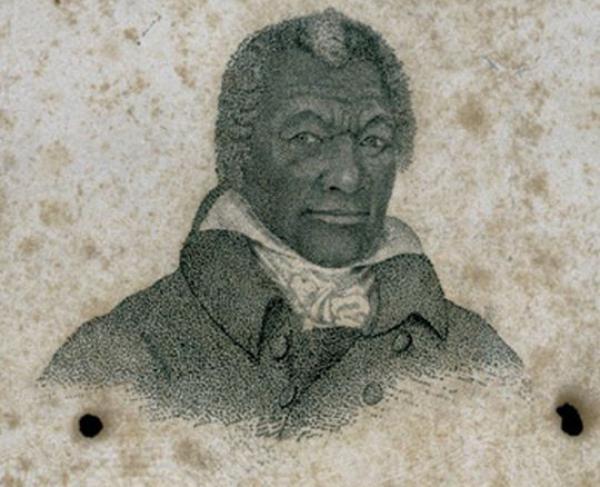
James Armistead Lafayette
James Armistead Lafayette was an African-American patriot who also served as a spy during the American Revolution. He was born into slavery in Virginia in 1748 and was owned by William Armistead. In 1781, he volunteered to serve in the Continental Army and was sent to spy on and infiltrate British lines. Under the guidance of General Marquis de Lafayette, he adopted the name of the General and became, “James Lafayette.” He worked as a double agent as well, feeding false information to the British while gathering vital intelligence for the American cause. His efforts proved invaluable in securing several American victories, including the decisive Battle of Yorktown.
After the war, he attempted to gain his freedom through a petition, which was supported by General Lafayette, acknowledging James’ extraordinary service to the United States military. He was granted his freedom in 1787 and went on to live a relatively quiet life after that.
Though his contributions were largely unrecognized during his lifetime, his legacy as a key figure in the American fight for independence has been increasingly acknowledged.
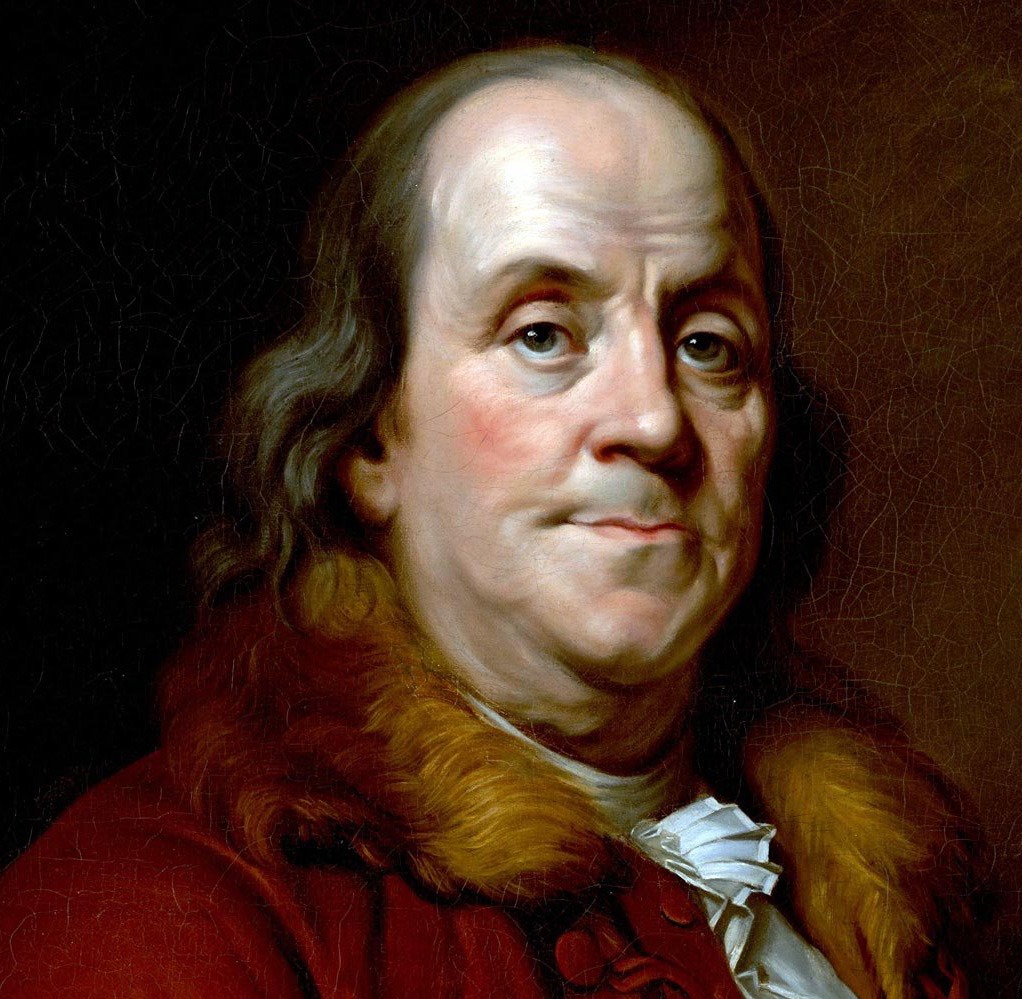
Benjamin Franklin
Benjamin Franklin has always seemed to be the most “approachable” of the Founding Fathers. While most of the Founding Fathers can appear unapproachable and distant in their biographies and portraits, Franklin’s slight smile and grandfatherly appearance reaches out to us 230 plus years after his death and invites us into a conversation with him. He was the Founder who felt that our nation’s new Republic in 1787 would thrive and succeed as long as we, the people, took care of it and kept it going. Dr. Franklin was also a valuable part of the process and completion of the Declaration of Independence. As the only delegate to be known worldwide in 1776, he helped to guide discussions and bring about compromises to unite the 55 delegates to the Second Continental Congress. He understood that the delegates must hang together or most assuredly, they would all “hang separately.”
Although he is now a synonymous figure with Philadelphia, Franklin was actually born in Boston in 1706. He was one of seventeen children born to Josiah and Abiah Franklin. The original plan was to have young Benjamin study to be a minister, which did not exactly fit with Franklin’s unique skill set so he needed to try other career paths. He became an apprentice for his brother James, who was a printer. This was a perfect trade for young Benjamin as he was an excellent writer and loved books and reading. At age 16, he began writing a series of essays under the pseudonym of “Mrs. Silence Dogood.” His character was a middle-aged widow who had humorous opinions to share with “her” readers. Franklin wrote 14 of these letters and his brother (who did not know who the author of them was) published them in his Boston newspaper. In 1723, Benjamin Franklin left his brother’s printing business and ran away to Philadelphia.
After not immediately finding a printing job that he liked, Franklin traveled to London where he worked in printing houses for a short time and then returned to Philadelphia which he then felt was his home. He became the publisher of the Pennsylvania Gazette which became the most popular newspaper in the colonies. Franklin married Deborah Reed in 1730 and the couple eventually had 2 children, Francis and Sarah. Deborah also raised Franklin’s illegitimate son, William. Franklin and his wife were apart for large portions of their marriage. She died in 1774 when Dr. Franklin was in England.
In 1732, Franklin began the publication of Poor Richard’s Almanac. It was published annually until 1758 and it became a must-have of colonial society. It contained news, weather forecasts, farming and domestic advice, poetry and other sections. It appealed to the normal, everyday person and many of Franklin’s most iconic sayings come from within its pages.
Benjamin Franklin also lived approximately 30 years in Europe where he was awarded honorary doctorates from British universities in 1759 and 1762.The title of Dr. Franklin comes from these awards. He also was in England during the passing of the Stamp Act in 1765 when the word of colonial uproar towards the legislation reached England. Franklin was, at first, unaware of the colonists’ hatred of the Stamp Act and went back and forth on the matter which caused him problems in the colonies. Later, he was of the opinion that the best way to get the act repealed was to boycott or not purchase the good affected. He also began to argue in England for colonial representation in Parliament if taxes were to be levied against the colonies. His idea fell on deaf ears.
As Dr. Franklin gradually became a supportive voice of the American colonies in England, his residency there was becoming less comfortable. This culminated in 1774 when he was brought in front of the Privy Council in London and was absolutely humiliated in front of the audience there. The speaker, Alexander Wedderburn, attacked his character and integrity over the emergence of a series of letters that were in Franklin’s possession. The letters somehow got released, angering the colonists further, due to their content that said some colonial rights may be further curtailed. Franklin chose not to speak on his own behalf. The next day, he was removed as Postmaster to the colonies. Franklin was furious and it is from this point that he tirelessly devotes himself to the idea of colonial independence. He returned home to the colonies in 1775, possibly to retire. He was sixty-nine years old.
Franklin’s arrival back in the colonies was celebrated in New York and Philadelphia. He was the world’s most famous American citizen and he was elected to the Second Continental Congress in 1775 as a representative of Pennsylvania. He advocated for the appointment of George Washington as the Commander of the Continental Army and was instrumental in helping to provide support and money for the Continental Army throughout the war.
Franklin was later appointed to the “Committee of Five” to draft a declaration of independence for the colonies. He served on the committee with Thomas Jefferson, John Adams, Roger Sherman and Robert Livingston. Jefferson was the primary author, but Franklin did suggest some important edits. His most famous edit was changing the phrase, “We hold these truths to be sacred and undeniable” to “We hold these truths to be self-evident.” Franklin believed that the term “sacred” sounded too religious and that “self-evident” sounded more scientific. Even though he was not the primary author, many of the ideas within the Declaration of Independence had been spoken by Dr. Franklin in the previous months and years. He wholeheartedly supported the document and voted in favor of Independence on July 2, 1776.
Throughout the Revolutionary War, Dr. Franklin was constantly working in some way toward American independence: from helping gain funds to finance it to traveling to France in efforts to help convince them to be our ally against Britain. He was extremely popular in France and was a large factor in the United States’ alliance with them which helped the colonies to win the war. He was a rock star in France, to use today’s expression. His face was on merchandise there and he claimed he was quite prominent there.
Franklin was called upon again in 1787 to be a part of the Constitutional Convention which resulted in our Republic that we are now entrusted to keep. Upon the Convention’s end, he is noted for his response to a woman asking what type of government the delegates had formed, whether a republic or a monarchy, to which Franklin replied, “A republic, Madam, if you can keep it.”
Benjamin Franklin seemed to do everything in his lifetime. In his 84 years he was a printer, publisher, writer, scientist (maybe most famous for his experiments with electricity), inventor, philanthropist, politician, diplomat, musician (he also created his own instrument, the glass armonica), postmaster and even a volunteer fireman. His lasting impact on Philadelphia is felt even today. He helped to create the first hospital there in 1751. He also strongly believed that books, ideas and information should be readily available to everyone and not just a select few. As a result, he created the first lending library in Philadelphia in 1731. He was part of the group that created Philadelphia’s first volunteer fire department. He also helped to create what is now the University of Pennsylvania, as well as founding the American Philosophical Society. He seemed to be the proudest of his earliest job which was that of a printer. As a result, he signed many letters as, “Ben Franklin, Printer.”
When Franklin died in 1790, an estimated 20,000 people attended his funeral in a city whose population in 1790 was around 28,000. His legacy in Philadelphia and the United States was secure then and should still be celebrated today.
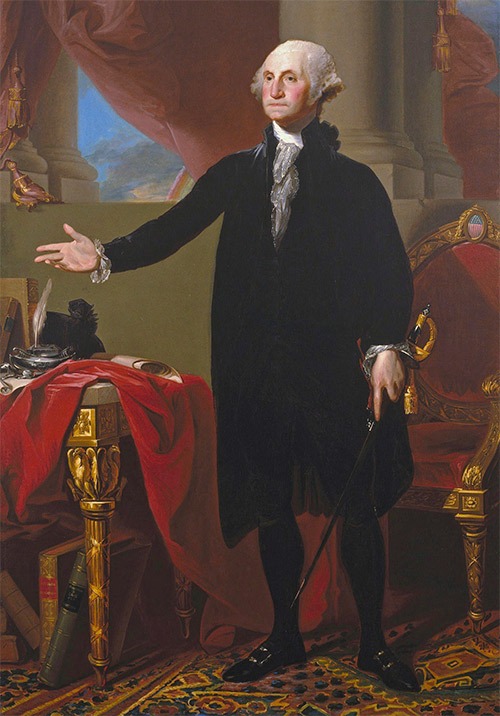
George Washington: Architect of Liberty – Illuminating the Path of the American Revolution
George Washington played a crucial role in guiding a young nation through the challenging birth of liberty.
As dissatisfaction spread across the thirteen colonies, Washington became a steadfast defender of the rights and aspirations of the American people. His unwavering commitment to freedom and self-determination placed him at the forefront of a revolutionary movement seeking to break free from tyranny.
The winter at Valley Forge showcased Washington’s leadership skills. In the face of bitter cold and hardships, he unified an army from diverse colonies with a shared purpose. His determination and resilience became the foundation on which a nation would stand.
The crossing of the icy Delaware River on Christmas night in 1776 highlighted Washington’s audacity and strategic brilliance. Leading his troops to a pivotal victory at Trenton, he reignited the flame of independence. This bold move became a symbol of Washington’s ability to turn adversity into triumph, setting the stage for the unfolding drama of the American Revolution.
Washington’s leadership, synonymous with sacrifice, was evident through the trials of war. His commitment was reflected in the silent courage of his troops, enduring harsh conditions for the promise of a nation free from oppression. The image of Washington at the helm, stoic and resolute, symbolized the spirit of a people determined to shape their destiny.
The climax of the American Revolution occurred at Yorktown, where Washington, alongside French allies, orchestrated a masterful siege leading to the surrender of British forces. This marked the triumph of liberty over tyranny, as the dream of a sovereign and independent America materialized before a hopeful nation.
Beyond military prowess, George Washington’s legacy encompasses the ideals of leadership, virtue, and civic duty. As the first President of the United States, he laid the foundation for a fledgling republic, steering the ship of state with wisdom and foresight. His Farewell Address, a poignant testament to his commitment to national unity, resonates through the corridors of time.
In the annals of history, George Washington stands as a symbol of transformative leadership and the enduring spirit of a nation. The American Revolution, with Washington at its helm, was more than a struggle for independence; it was a declaration of a people’s unyielding resolve to chart their course, govern themselves, and stand as a beacon of liberty for generations to come.
As the echoes of discontent reverberated across the thirteen colonies, George Washington emerged as a stalwart defender of the rights and aspirations of the American people. His unwavering commitment to the principles of freedom and self-determination propelled him to the forefront of a revolutionary movement that sought to cast off the shackles of tyranny.
The winter at Valley Forge bore witness to the crucible of Washington’s leadership. Amidst the bitter cold and hardships, he forged an army out of disparate colonies, united by a common cause. His steadfast resolve and resilience in the face of adversity became the bedrock upon which a nation would stand.
The crossing of the icy Delaware River on that fateful Christmas night in 1776 exemplified Washington’s audacity and strategic brilliance. In a daring move that defied the odds, he led his troops to a pivotal victory at Trenton, breathing new life into the flame of independence. This daring maneuver became emblematic of Washington’s ability to turn adversity into triumph, setting the stage for the unfolding drama of the American Revolution.
Through the trials of war, Washington’s leadership became synonymous with sacrifice. His commitment to the revolutionary cause was embodied in the silent courage of his troops, enduring the harshest of conditions for the promise of a nation free from oppression. The image of Washington at the helm, stoic and resolute, symbolized the spirit of a people determined to forge their destiny.
The climax of the American Revolution came at Yorktown, where Washington, in tandem with French allies, orchestrated a masterful siege that secured the surrender of British forces. The surrender at Yorktown marked the triumph of liberty over tyranny, as the dream of a sovereign and independent America materialized before the eyes of a hopeful nation.
George Washington’s legacy extends beyond military prowess; it encompasses the ideals of leadership, virtue, and civic duty. As the first President of the United States, he laid the foundation for a fledgling republic, steering the ship of state with wisdom and foresight. His Farewell Address, a poignant testament to his commitment to the unity of the nation, resonates through the corridors of time.
In the annals of history, George Washington stands as a colossus, a symbol of the transformative power of leadership and the enduring spirit of a nation. The American Revolution, with Washington at its helm, was not merely a struggle for independence; it was a declaration of the unyielding resolve of a people to chart their own course, to govern themselves, and to stand as a beacon of liberty for generations to come.
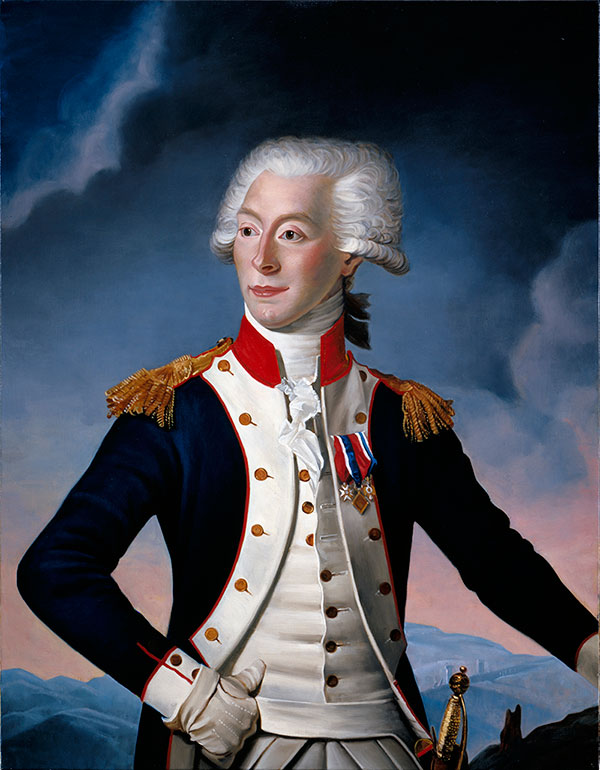
Gilbert du Motier, Marquis de Lafayette
Lafayette is one of the heroes of the American Revolution and a vital link between the United States and France.
Lafayette was born in 1757 into the French aristocracy and grew up in a very wealthy environment. After the Declaration of Independence was announced in France in 1776, Lafayette set sail for America. He was 19 years old when he arrived here with little military experience. He wanted to volunteer his services to engage in the fight for freedom with the Colonies.
Lafayette fought bravely throughout the war and was present at Yorktown in 1781, for the surrender of General Cornwallis’ troops, effectively ending the war. He made lifelong friends during the war and became one of General Washington’s closest friends after the war, visiting him at Mount Vernon in 1784. General Lafayette named his only son George Washington Motier de Lafayette as a tribute to his friend.
Lafayette returned to France after the American Revolution and helped to start the French Revolution for liberty and equality for all. Some refer to Lafayette as the hero of two worlds for his actions in both Revolutions. He was imprisoned as a traitor in 1792 for refusing to go along with the brutal tactics of the Reign of Terror in France. He was released in 1797.
Lafayette was also a true abolitionist who advocated for equality for everyone. He is an honorary citizen of the United States and is buried in soil from Bunker Hill surrounding him in France.
Lafayette came back to visit the United States in 1824-1825 and the bicentennial of that visit begins in 2024, with celebrations in place for every state that he visited including Alabama. Please visit https://lafayette200.org/ for more information. Vive Lafayette!
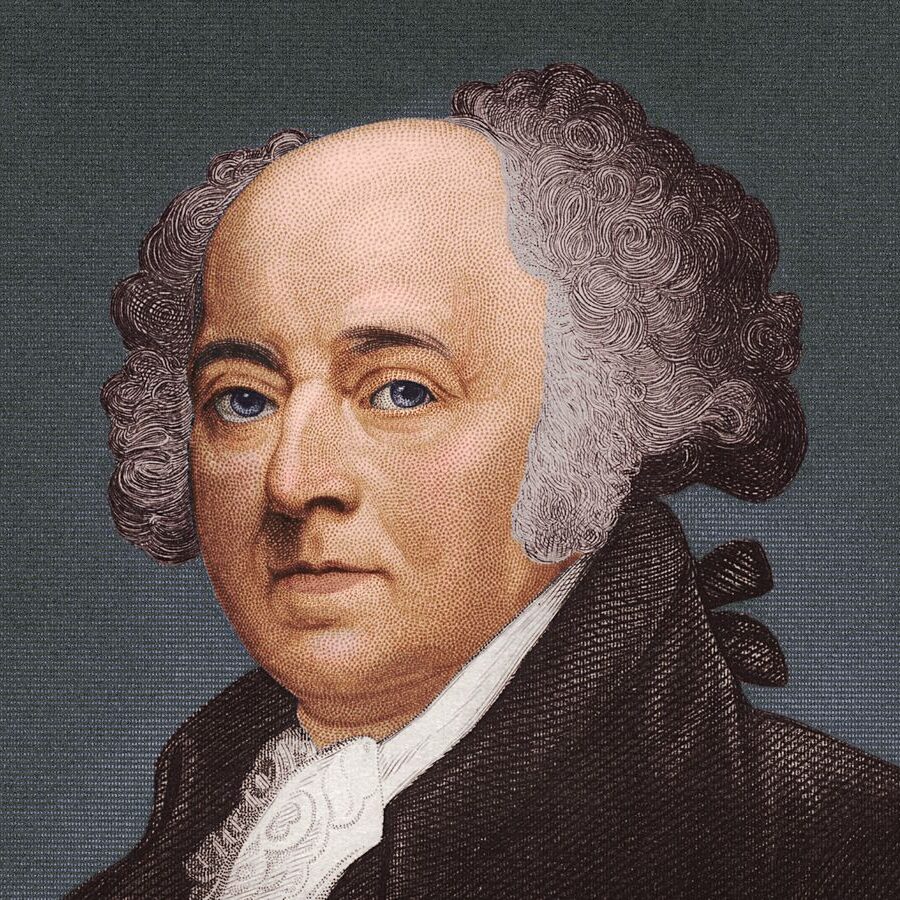
John Adams
John Adams holds a distinguished place among American founders, celebrated for his pivotal role in shaping the revolutionary spirit and governance of our nation. Adams had a hand in most aspects of our nation’s founding, from his writings against the unfair actions of the British government, to serving on numerous committees with the Continental Congress. As a fierce advocate for independence, Adams’s eloquent voice and indomitable spirit were instrumental during the Continental Congress, where he championed the cause that would lead to the Declaration of Independence. Additionally, Adams’ role in drafting the Massachusetts Constitution, which later served as a strong model for the U.S. Constitution, underscores his profound influence on the foundational structures of American governance. His leadership continued as a diplomat in Europe, and later as the second President of the United States.
Notably, Adams’s presidency is often underrated, yet one of his most significant achievements was his use of diplomacy to avoid war with France. This decision, critical yet controversial at the time, preserved the nascent nation’s stability and demonstrated his commitment peace over conflict. Adams’ legacy of dedication to the principles of liberty and justice not only helped forge our national identity but also continues to inspire American values today. His contributions make him a worthy exemplar of the spirit we celebrate in this 250th anniversary year of our country’s journey toward freedom and democracy.
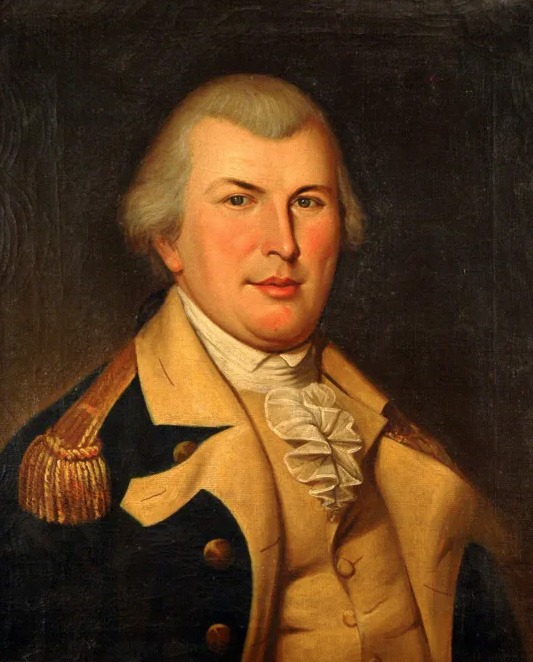
Nathanael Greene
General Greene was one of the greatest generals of the American Revolution. He was a brilliant tactician and strategist and well respected by his men and other commanders in the army, especially General George Washington, who said of Greene that he was “ a Gentleman in whom I place the most intire [sic] confidence.” He was known as the “Fighting Quaker,” and he rapidly rose through the Continental Army ranks, becoming a general in 1775. He led his troops to victory at the battles of Trenton and Princeton and became the commanding general of the Southern Theater of War in 1780 and was instrumental in ending the British occupation there and bringing about the end of the war in 1781. General Greene died of heat stroke in 1786 and is buried in Savannah, Georgia.
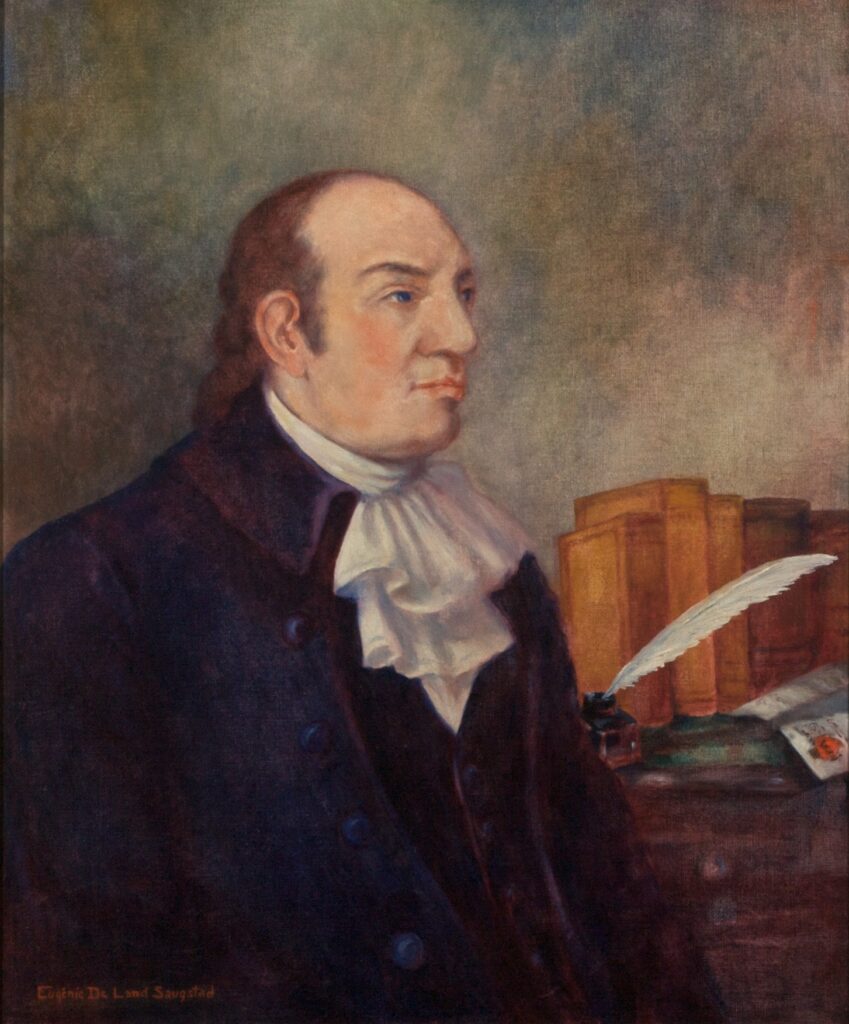
George Wythe
George Wythe was a “teacher of the Founders.” His home in Williamsburg, Virginia was the place where Thomas Jefferson, John Marshall, and James Monroe all were educated in the law as well as Greek, Latin, and mathematics at William and Mary. He served in the House of Burgesses between 1754 and 1766 and was a brilliant legal mind. When the Colonies began to resist British rule, Wythe was at the forefront, becoming a delegate to the 5th Virginia Convention and was a signer of the Declaration of Independence. He helped to re-write the laws for the State of Virginia along with Thomas Jefferson. He was later part of the Constitutional Convention, but left the Convention early and was not a part of the final debates, nor did he sign the document. He left the Convention to attend to his beloved wife, Elizabeth. He did help to ratify the Constitution as a Federalist for the state of Virginia in 1788. He taught at William and Mary until 1789 and moved to Richmond when it became Virginia’s capital city.
Wythe should also be remembered as a gradual opponent of slavery. Throughout his life, in which he was a slaveholder, he began to realize the practice was a barbaric contradiction to his teachings on freedom and liberty. He began to release some of his slaves, hiring some back as paid workers in his home in Richmond, Virginia. By the time he died, Wythe had freed all of his slaves. Many associates and friends shunned Wythe for these views.
Wythe died in 1806. He was allegedly poisoned by his grandnephew, George Sweeney.